






Bolaji Obabiyi (intern)
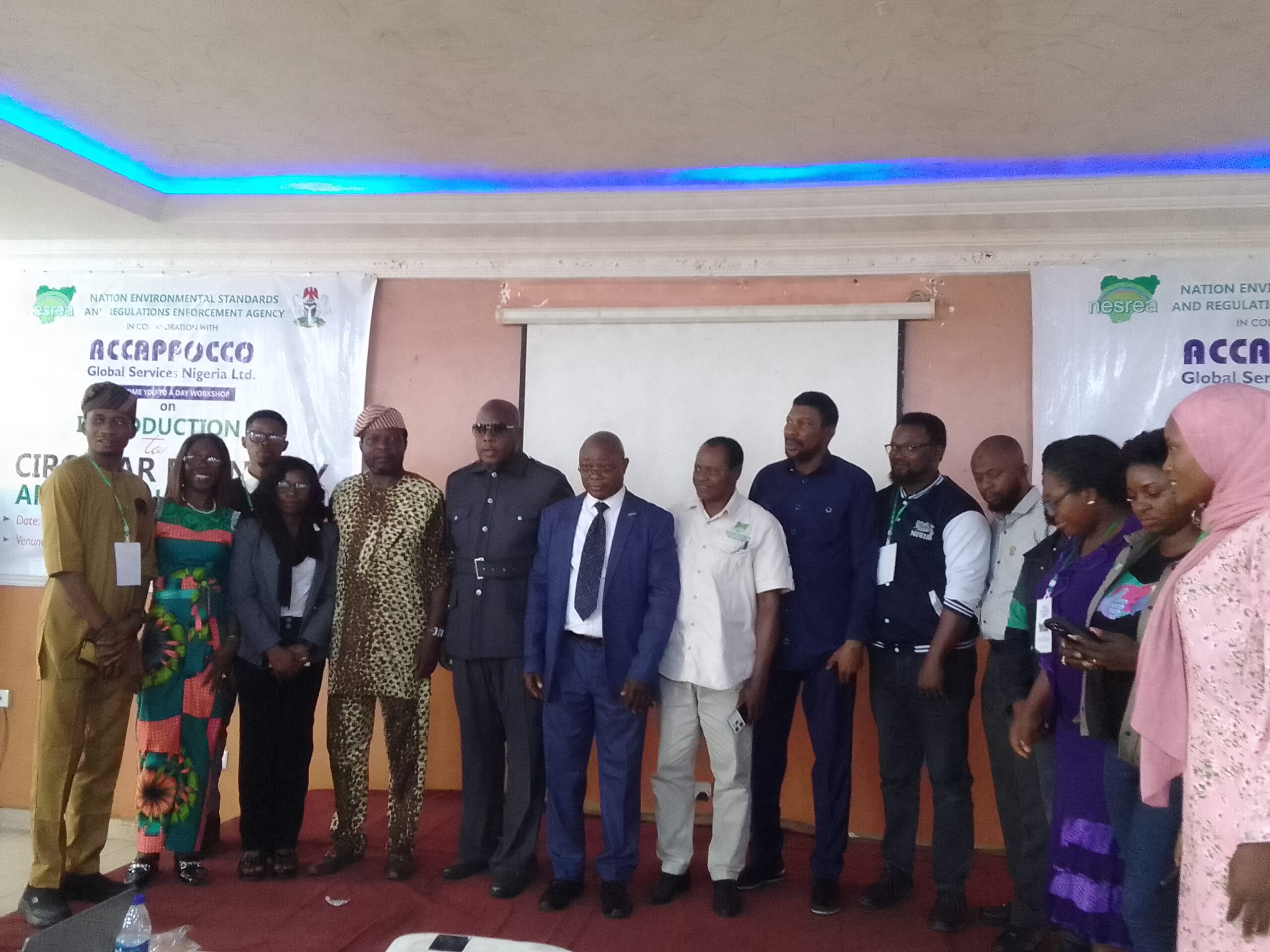
Stakeholder have converged on Abeokuta, Ogun State Capital for a one-day workshop to explore solutions to waste management, climate change, and sustainable development, and expressed optimism that increased awareness, combined with strict enforcement of environmental regulations, would lead to a cleaner, healthier, and more sustainable environment in Nigeria.
Penpushing reports that the workshop was organised by National Environmental Standards and Regulations Enforcement Agency (NESREA) in collaboration with ACCAPPOCCO Global Services Nigeria Limited
The Ogun State Coordinator of National Environmental Standards and Regulations Enforcement Agency (NESREA), Lanre Jimoh, speaking at the workshop identified indiscriminate waste disposal as a major contributor to flooding and environmental degradation in many parts of the country.
Penpushing further reports that he pointed out that blocked drainage systems and polluted waterways are often the result of poor waste management practices, particularly the dumping of plastics and other refuse.
“The issue of flooding is closely linked to our attitude towards waste disposal. If we manage waste properly, our drains and rivers will not be blocked,” he said.
Penpushing also reports that, Jimoh stressed the need for a nationwide attitudinal change, urging participants to take the message of environmental responsibility back to their communities.
The coordinator disclosed that the agency has been mandated to commence strict enforcement of the Extended Producer Responsibility (EPR) policy, a regulatory framework that holds producers accountable for the lifecycle of their products.
Penpushing reports that he said the enforcement would ensure that manufacturers take responsibility for waste generated from their products, particularly in sectors such as plastics, batteries, food and beverages, and used tyres.
The agency boss added that under the new directive, producers are required to incorporate a minimum of 30 per cent recyclable materials into their production processes and warned that violators of environmental regulations would face legal consequences
“Penalties are clearly defined by law. Offenders will be prosecuted, fined, and where necessary, jailed to serve as a deterrent to others,” he emphasized
Penpushing further reports that the guest lecturer Prof John Oyedepo described the green economy as an economic model that enhances human well-being and social equity while significantly reducing environmental risks and ecological scarcities.
The lecturer explained that the concept promotes low-carbon development, efficient use of resources, and social inclusiveness, all of which are critical to achieving sustainable development goals.
Penpushing also reports that Oyedepo lamented Nigeria’s continued reliance on the linear economic model, which involves extracting resources, using them, and disposing of them as waste.
The guest lecturer warned that such a model is no longer sustainable, given the increasing pressure on natural resources and the growing impact of waste on the environment.
“If we continue with this pattern, the next generation may not have anything left to rely on. We must begin to transition to a circular and green economy,” he said
Penpushing reports that he highlighted the role of green financing in driving sustainable development, noting that financial instruments such as carbon finance, blended finance, and Environmental, Social, and Governance (ESG)-linked investments could support environmentally friendly projects.
The Professor urged financial institutions and investors to begin prioritising green initiatives, despite their long-term returns, stressing that environmental sustainability is a collective responsibility.
The Managing Director of ACCAPPOCCO Global Services Nigeria Limited Valentine Opone, said the workshop was designed to expose participants to the economic opportunities embedded in circular and green economy practices.
Penpushing further reports that he noted that Nigeria, as a signatory to several international environmental agreements, must begin to take advantage of available opportunities, including access to green funds and international support for sustainable projects.
The Managing Director explained that the traditional “take-use-dispose” model of production has contributed significantly to environmental degradation and resource depletion.
Penpushing also reports that he said the circular economy approach, which emphasises reuse, recycling, and sustainability, would help preserve the environment for future generations while also supporting economic growth.
The Director pointed out that, adopting green practices would also help reduce health risks associated with pollution, including diseases linked to persistent organic pollutants and unsafe industrial processes.
Penpushing reports that Adewale Matthew Taiwo in his presentation emphasised the importance of Health, Safety and Environment (HSE) and environmental risk management in achieving a sustainable environment.
The presentation equally explained that industrial activities and the burning of fossil fuels release greenhouse gases, particularly carbon dioxide, which contribute to climate change, noting that the effects of climate change include extreme weather conditions such as drought and excessive rainfall, both of which pose serious threats to agriculture, livelihoods, and infrastructure.
Penpushing further reports that he advocated for decarbonisation strategies, including the adoption of renewable energy sources such as solar, wind, and biomass, as well as improved energy efficiency.
“We cannot achieve a circular or green economy without addressing carbon emissions and protecting human health. Sustainability must be at the centre of all our actions,” he said.
Penpushing also reports that he called on government to strengthen enforcement of environmental laws and ensure compliance by industries, while encouraging individuals to reduce carbon usage in their daily activities.
The participants at the workshop were urged to adopt responsible waste management practices, reduce their environmental footprint, and promote sustainability awareness at the grassroots level.
Penpushing reports that the event featured technical sessions on green financing, waste tracking using spatial technology, and strategies for improving environmental accountability across sectors.
FOOTNOTE: You want to share story with us? You want to advertise with us? You need publicity for product, or service, or event? Contact us on WhatsApp +2348073463653 or email penpushing@yahoo.com