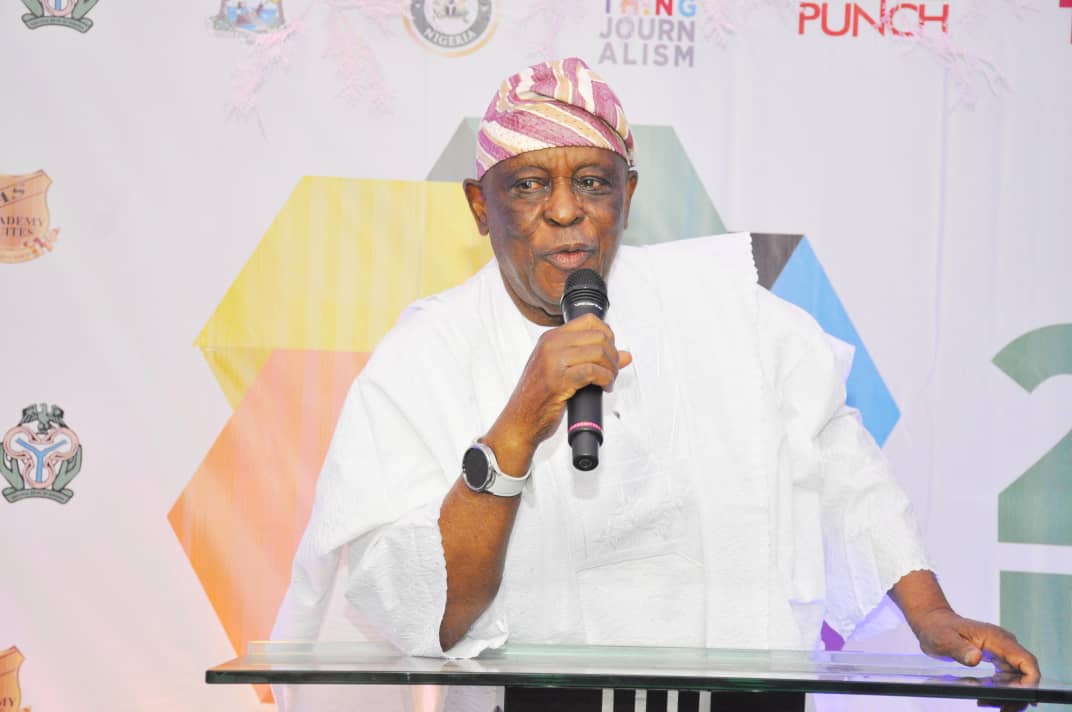









Text of Lead paper presented at a Workshop on Elections’ Security, Community Relations, the Electoral Law and the Media
By Professor Chief Fassy Adetokunboh O. Yusuf, Ph.D.(LL.B(Hons), BL, M.Sc, M.B.A, M.CAM, fnipr, frpa, FNIM, FCIoD.)
Abstract
In the 2027, Nigeria will enter into another phase in its democratic journey. Asides the off cycle elections, elections will be conducted to the offices of the President and VicePresident, Senate, House of Representatives at the Federal Level. At the state level, there will be Gubernatorial and House of Assembly elections. The General Elections,therefore, place a lot of premium on the operational readiness of the Nigeria Police, the community, the media and indeed, law. We need a mastery of the modus operandi of relevantinstitutions and legal instruments for the operators to appreciate the enormity of the task ahead of them. To address these issues, we shall examine the following; Election, Security, Community Relations, the Media and the Law.
Thereafter, attempt will be made to place them on a scale to determine the role they will be playing during the electoral processes. It is desirable that the Police take the centre stage, having been empowered under the Constitution to protect lives and property. Without security, nothing can be achieved and the alternative to security is anomie, anarchy, chaos and disorder.
Keywords: Elections, Security, Community Relations, Media and Law
1.0 Introduction
Democracy (from the Greek words: demos- people, and kratos- rule) has become the best way citizens/the people are governed. It is the government of the people, by the people and for the people. It is a common knowledge that elections are the formal processes where citizens choose those who make decisions on their behalf; that is, how the leaders actual rule having derived their authority from the people. Periodic elections confer legitimacy, representation, allow for accountability, peaceful change/transfer of power, and effective participation.
Periodic election is one of the very rudiment foundations of democratic governance in a society. The Nigerian state has experienced a surge in democratic advancements in the last twenty years when democracy was restored, that is, the return to civilian rule. A democracy is a system of governance where voters elect representatives to office via free, fair and credible elections.
- Professor Chief Fassy Adetokunboh O. Yusuf, is a multidisciplinary professional and scholar. He is an expert in Public Relations, Advertising, Strategic communications, Journalism, Social media, Law, Governance, Reforms & Total Quality Management, and Strategic management. He started his career in the Nigeria Police between 1973 & 1976; he was editor of Sporting World; Secretary General, Nigerian Institute of Public Relations (1989 to 1991); former Ogun State Commissioner for Information, Sports, Culture, Community Development & Social Welfare; former Chairman of Sketch Press Limited); former Consultant to the Federal Government on Servicom & Reforms; former Consultant on World Bank, UNDP, AfDB & DfID projects; Author, Columnist, etc. He is currently a lawyer, writer, consultant, a university lecturer, and a community leader.
Put differently, democracy suggests that the people have the power to choose their leaders. A democratic system is distinguished from any other by the political right of the people to choose their leaders through a free and fair election process.
The ingredients for meaningful elections include: adherence to the rule of law, observance of human rights, strong institutions, and civic culture. Without these essentials, what is in existence facade or illiberal democracy.
It should be noted that the 2023 General Elections were the seventh in a series of elections held since Nigeria’s return to civil rule in 1999 and the forthcoming 2027 General Elections will be the eighth to be conducted in this new democratic dispensation, it is thus imperative that all hands must be on deck to ensure a continued democracy guided by the rule of law and where lives and property of citizens are well protected.
Scheduled by the Independent National Electoral Commission (INEC) to commence in early 2027 with Presidential and National Assembly polls slated for January 16, 2027, followed by Governorship and State Houses of Assembly elections on February 6, 2027, the elections represent a critical democratic review and a litmus test for the country’s maturing electoral process. The scheduled polls will determine the executive leadership at both federal and state levels as well as legislative representation across the 109 Senatorial Districts, 360 Federal Constituencies of the House of Representatives, and the 36 State Houses of Assembly.
The socio-economic and political landscape leading into the 2027 cycle is defined by complex multi-dimensional realities. National security challenges, ranging from cross-border criminality and insurgency to sub-regional banditry and economic sabotage form a critical backdrop against which political parties will construct their manifestos. Legally and technologically, the 2027 elections will test the operational efficacy of the Electoral Act 2026 alongside INEC’s technological infrastructure, specifically the Bimodal Voter Accreditation System (BVAS) and the INEC Result Viewing Portal (IReV). The media has a major role to play in theelectioneering process by ensuring proper dissemination of information based on available fact, maintaining neutralitywhile demanding responsible reporting to prevent election violence and disorder.
This paper is, therefore, anchored on preparing all and sundry within the electoral and security architecture of the Gateway State to include Security Agencies, Community Leaders, the Press, Electoral Officers as well as the masses to ensure a smooth electioneering process in Ogun State and Nigeria at large. The objective borders on enhancing all the operational apparatus and human resources of the Police and the media towards a successful conduct of the 2027 general elections, ensure that the elections are conducted freely, creditably and peacefully without fear or intimidation, and where security personnel are to operate within the of the law.
That this workshop is being anchored by the Ogun State Command of the Nigeria Police preparatory for the 2027 General Elections is, to my mind, a laudable attempt to deepen democracy by bringing together the major players, ensuring the police is neutral, INEC is actually independent, the media is socially responsible, security is guaranteed and that communities trust the electoral process.
The paper will be guided by the extant provisions of the Constitution of the Federal Republic of Nigeria, 1999 (as amended), The Police Act, 2020, The Electoral Act, 2026 as well as relevant scholarly works applicable for the purpose of this workshop. As disclosed by the organisers, I pray that at the end of the workshop, the objectives are met and the deliverables are achieved.
2.0 DISCUSSIONS
2.1Elections
One of the essential features of democracy and democratic governance is periodic elections. Democracy is a form of government in which people are empowered to exercise their rights to free and fair elections, freedom of expression, assembly and association, and the rule of law in order to influence decisions that impact their lives and the well-being of their society as a whole (International IDEA, 2021).
The democratic process is fundamentally based on elections. It is a way to translate the fundamental component of citizen equality in democratic societies into relation through the state’s electoral office constitution of “one person, one vote”. This is only true, though, if elections are legitimate, fair, and free (Alemika, 2011).
Thus, election is the process where masses through the ballot select and choose an individual or multiple individuals to hold public offices with the sole aim of governing the affairs of the state for a definite period of time. It is one of the two sides of the coin in actualizing the social contract between the people and the government; i.e. an election serves as the practical moment where citizens use their votes to renew or break the social contract with their leaders.
It should be noted that the importance of elections in a democratic state cannot be overemphasized. Elections that are credible, dependable, and satisfactory to a broad range of domestic and global stakeholders are essential to the health of democracy as a system of governance. A crucial step in a state’s journey from transitional democracy to attempts to consolidate democracy is holding elections. The degree of electoral process freedom and fairness is shown by the relationship between the electoral process and democratic consolidation (Huntington, 1991; Ogunbanjo, 2024b).
When there are no restrictions or conflicts in the electoral process, it is considered free. It is widely understood that the Police play a critical role in the election process, through the protection of lives, property, etc. Democratic societies are constitutionally entitled to choose their leaders, therefore democratic governance is an electoral contract between the governed and the governors through free and fair elections. By selecting a candidate to support or oppose, voters can also bargain with political candidates on the terms of government.
In his book titled “The Substance of Politics”, Appadorai opined that the primary means by which people exercise their sovereignty is the vote. Those who are qualified by the law of the State to elect members of ‘government’ form the electorate. He further stressed that …the right to vote is given to all adult citizens…
Every Nigerian has the right to vote and be voted for in an election once such individual meets the required measure to stand as a candidate in an election or to vote for a candidate of choice in any given election. It is unarguable to note that elections are to be contested, even where the position is not opposed by any other candidate, the candidate seeking to be elected will nonetheless still stand to be elected. Philosophically, election is one aspect of politics men engage to define their positions in the society, as they struggle for scarce resources and as they try to convince others to accept their point of view.
Elections in a democratic government must be free and fair, competitive, transparent, credible where electoral body is independent and neutral and also, every eligible individuals must be allowed to vote. Conversely, election in a democracy is a formal, periodic process by which the people of a country choose individuals or parties to occupy public offices and make decisions on their behalf. It is the central mechanism of democracy giving government the authority to rule, core representation, leader accountability, peaceful transfer of power and allows citizens to choose between competing visions, policies and ideologies.
The core purposes of an Election, include, but not limited to:
● Legitimacy: It gives government the authority to rule. “Power belongs to the people” becomes real through voting.
● Representation: Citizens elect people who share their interests, values, and can speak for them in government.
● Accountability: Regular elections force leaders to perform. Poor performance = risk of being voted out.
● Peaceful Transfer of Power: It provides a constitutional way to change government without violence or coup. Since May 29, 1999 we have been enjoying unfettered democracy.
● Policy Choice: Elections allow citizens to choose between competing visions, policies, and ideologies.
The Inspector General of Police, IGP Olatunji Rilwan Disu, psc(+), NPM in his address at Owerri, Imo State on September 21, 2026 noted that election security must be understood as a responsibility that extends beyond the conduct of voting on election day:
“Our duty does not begin on election day. It covers the whole electoral cycle: intelligence, planning, training, protecting INEC staff and materials, preventing violence and responding fast. We must prepare before the crisis, not during it . . . .”
This approach recognises that effective election security begins long before voters arrive at polling units. Early identification of flashpoints, mapping of criminal networks, timely dissemination of credible intelligence and adequate preparation of personnel are therefore, essential to preventing electoral violence rather than merely responding to it when it occurs.
The following desiderata must be in place for us to have credible elections, that is, the conditions precedent for credible elections:
➢ Universal Adult Suffrage: Every eligible adult has one vote;
➢ Free and Fair: No intimidation, vote buying, or manipulation;
➢ Competition: Multiple candidates/parties contest;
➢ Transparency: Results are collated and announced openly; and,
➢ Independent Electoral Body: An umpire trusted to be neutral.
2.2Security
Nigeria is dealing with many security issues that are changing fast. These include terrorism, insurgency, militancy, armed robbery, and kidnapping. There are also conflicts between farmers and herders and a rise in banditry. These issues are very serious and harm Nigeria’s economy and politics.
Security and insecurity are concepts that though appear contradictory, are mutually reinforcing. This means insecurity exists so that avenues can be created for security to be obtained and realized (Akinwunmi and Esidence, 2021). In the words of Akin (2008) security can be used to mean those strategies put in place by institutions or groups of persons in order to forestall imminent injuries to the next person or groups of people.
Security, therefore, can be used as measures that safeguards and protects against any form of hostilities of any form targeted at inflicting pains on one’s opponent. On the other hand, insecurity finds expression in the way and manner certain actions or inactions of persons or groups can lead to some level of danger, fear, hazards, uncertainty and even death.
In accordance with the provisions of the Constitution, the SECURITY and welfare of the people shall be the primary purpose of government. It is imperative to note that the purpose of government is to ensure the safety of its citizens, having agreed to part with some of their natural liberties and agree to obey the laws prescribed by the government, the idea of social contract is found in the political treatises both of East and the West where people suffering from anarchy submitted their rights to the government appointed/elected by them and they in turn take upon themselves, the responsibility of maintaining the safety and security of their subjects. This view is also supported by Plato in his work, the Crito.
The Nigeria Police Force, the Military and all Para-Military Organization recognized by government are saddled with the responsibility of ensuring the safety of the Nigerian state, at the community level, state and national levels and against external aggression. It is the duty of the Police, however, to ensure that all Nigerians are well protected and assured of safety and security of their lives and property as we progress into the forthcoming general elections.
2.3 Community Relations
Community relations is the set of strategies, practices and ongoing interactions an organization or state uses to build and maintain mutually beneficial relationships with the community it impacts. It is a specialized function of public relations and corporate strategies defined as being systematic, continuous efforts to establish and maintain mutually beneficial relationships with the local populations in which it operates (Cutlip et al., 2006).
Effective community relations relies on two-way communication, active listening, and ongoing stakeholder engagement designed to align an organization’s operational goals with the social, economic, and environmental needs of its immediate neighbors (Grunig & Hunt, 1984).
Rather than functioning as a passive public relations exercise, community relations serves as an operational security mechanism. By engaging grassroots structures such as the Police Community Relations Committees (PCRC), civil society organizations, youth groups, and local security outfits like Amotekun, law enforcement builds a proactive social license to operate. This collaborative framework bridges the historical trust deficit between security forces and the public, creating an early-warning ecosystem that deters political thuggery, mitigates localized violence, and safeguards the integrity of the polling environment.
Thus, community relations act as the essential social glue that ensures peaceful elections and protects fundamental democratic rights. Grounded in the statutory mandates of the Police Act 2020 (Sections 113–119), which formalize community policing, effective community relations creates a shared responsibility matrix where the police act as rights-respecting protectors rather than oppressive forces, and the media functions as a responsible, objective bridge for public information.
Equally important, according to the IGP at Owerri, Imo State is “the relationship between the Police and the communities they are mandated to protect”. Election security cannot be achieved by the Police acting in isolation. Traditional and religious leaders, youth organisations, civil society groups, the media and ordinary citizens often possess valuable knowledge about emerging tensions and local security concerns. Continuous engagement with these stakeholders can strengthen early-warning mechanisms, improve public confidence and facilitate the timely reporting of threats. Community partnership should therefore be regarded not merely as an election-period strategy, but as a continuing policing responsibility founded on communication, accessibility, trust and mutual accountability.
Contextually, police community relations refer to the ongoing interactions, communication, and mutual trust between law enforcement agencies and the local communities they serve.
The Core Objectives are:
- Build Trust: Create positive connections so residents trust officers during emergencies or investigations.
- Share Information: Make it easier for citizens to report suspicious activities and for police to warn the public about local dangers.
- Prevent Crime: Stop crimes before they happen through cooperative local programs like neighborhood watch, local vigilante, further strengthening of the existing Amotekun structure and actualization of the State Policing System.
The Key Activities in Police Community Relations are: - Outreach Programs: Host youth sports, educational seminars, and health drives to connect outside of regular law enforcement duties.
- Volunteer Groups: Work with structured community groups such as the Police Community Relations Committee (PCRC)—to bridge gaps between local populations and police formations.
- Transparent Communication: Hold open town halls and public meetings to address neighborhood safety concerns and complaints.
2.4 Media
Scholarship defines the media as the institutionalized complex of communication channels encompassing traditional press, broadcast, and digital networks—that functions as both a “watchdog” over state power and an essential space for civic discourse (McQuail, 1992; Hallin & Mancini, 2004). Dennis McQuail conceptualizes the media as a public trust responsible for providing accurate, impartial information to enable citizens to make informed decisions and hold political elites accountable (McQuail, 1992).
The media acts as the primary mechanism for voter enlightenment and democratic scrutiny (McQuail, 1992; Hallin & Mancini, 2004). Scholars emphasize that during election cycles, news media transform abstract constitutional rights into civic action by educating the populace on voting mechanics, analyzing party manifestos, and subjecting electoral management bodies such as Nigeria’s Independent National Electoral Commission (INEC) to public examination (Ibeanu, 2007; Nwangwu, 2014). Without an independent, professional media architecture, democratic elections risk devolving into state-directed propaganda contests dominated by incumbent interests.
As the fourth estate of the society, the media has the power to check the government, inform the public and hold people accountable. It is expected of the media to serve as the mirror of the society by reflecting happenings in the society and monitor those in power. The media is expected to act as an independent evaluator of state coercion and electoral security (Ibeanu, 2007; Premium Times Centre for Investigative Journalism [PTCIJ], 2020). Political scientists, Okechukwu Ibeanu note that the media exposes police misconduct, vote-buying complicity, and voter intimidation at polling units, compelling law enforcement leadership to uphold statutory standards of neutrality (Ibeanu, 2007).
It is a natural phenomenon that where there is political struggle and contests, there is bound to be tension, conflict and disputing opinions. In order to douse tension and not to heat up the polity, the media has a significant role to play to report issues accordingly without fear or favour or engage in any form of discriminatory news reportage.
IGP Rilwan Disu opined that the media and digital communication environment have also become central to election security as there is need for “real-time reporting, situational awareness and rapid response, because a command is only good as its ability to act on information”. False information, fabricated election results, forged security statements and inflammatory online content can spread rapidly and generate tension before security agencies have the opportunity to respond physically.
The Police therefore have a legitimate security interest in developing reliable communication channels, real-time situational awareness and mechanisms for promptly correcting demonstrably false information capable of inciting violence. At the same time, such interventions must remain within the law and respect the rights of citizens, because public confidence in election security depends not only on the Police responding quickly, but also on their response being lawful, professional and transparent.
2.4.2Roles of the Media in 2027 General Elections
- Information and Surveillance Role
The primary responsibility of the press is the timely provision of information so citizens can make proper decisions. This “surveillance role” requires reporting occurrences as they happen. For 2027, this means covering voter registration, party primaries, INEC preparations, and results collation in real time. - Watchdog and Accountability Role
The media must serve as a platform for diverse opinions and ensure balance by representing all sides. INEC Chairman Prof. Joash Amupitan said the media’s role is to “force external accountability against INEC’s own benchmarks”. After the 2023 election was criticized for “opacity, weak explanations, and institutional defensiveness”, the media is expected to minutely inspect INEC’s preparations and refuse to accept “proclamations for preparations, or volubility for competence”. - Voter Education and Civic Mobilization
With over 200 million citizens, the media must explain reforms, electoral procedures, and new provisions in the Electoral Act 2026. - Gatekeeper Against Misinformation and Disinformation
The rapid spread of misinformation, disinformation and manipulated contents fuelled by digital platforms and artificial intelligence poses a growing threat to democracy. It is a known fact that the most dangerous weapon in 2027 may not be a gun, but misinformation amplified through the media. Thus, journalists need to scrutinize information on social media, especially AI-generated contents and anonymous accounts and doctored videos. - Platform for Fair Political Communication
Under the Electoral Act 2026, the media must ensure “equitable access to media platforms and barring abuse of state-owned media. The law states that State apparatus, including the media, shall not be employed to the advantage or disadvantage of any political party or candidate and media time should be distributed evenly among political parties. - Promoting Peace and National Unity
The law prohibits the use of abusive language directly or indirectly likely to injure religious, ethnic, tribal, or sectional feelings. The media is expected to draw a firm line between legitimate debate and dangerous rhetoric and help ensure credible and peaceful elections.
2.4.3 Expectations from the Media
- Professionalism and Accuracy: INEC has continually charged broadcasters to uphold fairness, professionalism, and accuracy. The Commission has noted keenly that airwaves of the media have become the primary infrastructure of our democracy. If they are clear, the nation sees the truth.
- Partnership to Rebuild Trust: INEC acknowledged a widening trust deficit and urged the media to help communicate transparency so citizens “understand and trust the process”.
- Protection of Press Freedom: The Government both at the Federal and State levels are committed to ensuring journalists operates “without fear” and that “attacks on media practitioners would not be tolerated”. Hence, there should be a stronger collaboration between security agencies and the media to ensure an unbiased press.
2.5Law
In jurisprudence, law is defined as a codified system of rules, legal standards, and institutional procedures recognized by the state to govern social behavior and regulate political power (Austin, 1832; Hart, 1961). Jurisprudent H.L.A. Hart conceptualizes law as the union of “primary rules” (which impose behavioral obligations) and “secondary rules” (which confer powers to create, alter, and adjudicate those obligations) (Hart, 1961).
In contrast to earlier command theories of law (Austin, 1832), sociological jurists like Roscoe Pound define law as a dynamic instrument of “social engineering”, a framework designed to balance competing human interests, prevent societal chaos, and secure order in democratic states (Pound, 1921).
Law establishes the legal and constitutional framework within which political power is contested and conferred (Hart, 1961; Nwangwu, 2014). Scholars of Nigerian constitutional law stress that electoral laws anchored in the 1999 Constitution (as amended) and the Electoral Act 2026 serve as legal standards that legitimize state power. These legal statutes establish candidate eligibility rules, mandate internal political party democracy, regulate campaign finances, and provide judicial channels for resolving electoral disputes through election petition tribunals (Electoral Act 2026; Nwangwu, 2014).
3.0 COMPARATIVE ANALYSIS OF THE ELECTORAL ACT 2026 AND LAW ENFORCEMENT AGENCIES
President Tinubu signed the Electoral Act 2026 (Repeal and Re-enactment) into law on 18 February 2026. It replaces the Electoral Act 2022 and contains 155 Sections. One of the major areas of controversy is Section 60.
3.1RESULT TRANSMISSION – SECTION 60(3)
Electoral Act 2022: INEC was to prescribe the mode of transmission of election results, leaving the provision relatively vague.
Electoral Act 2026: Results must be transmitted to IReV after EC8A has been signed and stamped by the Presiding Officer and countersigned by Candidates or Polling agents. The reference to real-time transmission has been removed. Where there is a network failure, the EC8A paper copy becomes the primary source.
Implication for Law Enforcement: As a result of this new development, the role of security agencies at the collation stage becomes more significant. Since the paper EC8A may become the primary source where electronic transmission fails, the Police and other relevant agencies must secure election materials during transportation from the Polling Unit to the appropriate Collation Centre and ensure proper documentation of the chain of custody. This creates a need for heightened vigilance against alteration, substitution or manipulation of result forms.
3.2ACCREDITATION – SECTION 47
Electoral Act 2022: Accreditation was carried out using the Smart Card Reader.
Electoral Act 2026: The BVAS replaces the Smart Card Reader. The PVC remains the valid voter identification document, and electronic voter identification is not provided for.
Implication for Law Enforcement: The Police, NSCDC and other relevant security agencies must enforce the requirement that voters present their valid Permanent Voters Card. The use of phone screenshots, NIN slips or other unofficial identification should not be permitted. Security agencies must also protect BVAS devices against damage, theft or unlawful interference, particularly where such conduct constitutes an electoral offence.
3.3PVC BUYING AND SELLING, BRIBERY AND CONSPIRACY – SECTIONS 22 AND 125
Electoral Act 2022: A fine of ₦2 million and/or imprisonment for two years was provided.
Electoral Act 2026: The fine has been increased to ₦5 million, while the two-year imprisonment provision is retained. The proposed 10-year imprisonment provision was rejected by the Senate. Any person who directly or indirectly by his or by any other person on his or her behalf, corruptly makes any gift, loan, offer, promise procurement or agreement to or for any person, in order to induce such person…commits an offence and is liable on conviction to a maximum fine of N2,000,000.00k or imprisonment for a term of 12months or both.
Implication for Law Enforcement: The increased penalty strengthens the legal deterrent against networks involved in the buying and selling of PVCs. The Police and other relevant enforcement agencies should investigate and apprehend persons involved in organised PVC buying or selling, including both buyers and sellers where the evidence establishes the offence. Law enforcement agencies should not only apprehend and arrest PVC buyers and sellers but also, persons involved in Vote buying and selling alike.
3.4ELECTORAL TIMELINES – SECTIONS 28 AND 29
Electoral Act 2022: Notice of election was to be published 360 days before the election, while the submission of the list of candidates was subject to a 180-day timeline.
Electoral Act 2026: The notice period has been reduced to 180 days, while the period for submission of the list of candidates has been reduced to 90 days.
Implication for Law Enforcement: The shorter electoral timetable creates a more compressed period for security planning and threat assessment. The Inter-Consultative Committee on Election Security (ICCES) in Ogun State will therefore need to commence threat assessment, hotspot mapping, intelligence coordination and deployment planning within a shorter timeframe.
3.4COURTS CANNOT STOP ELECTIONS – SECTION 88(4)
Electoral Act 2022: Court proceedings and injunctions could create circumstances in which elections or related electoral processes were affected.
Electoral Act 2026: Courts are restricted from stopping the conduct of primaries or general elections merely because a case relating to the election is pending.
Implication for Law Enforcement: Security agencies must distinguish between lawful and enforceable court orders and mere claims that a matter is pending before a court. The existence of litigation does not, by itself, suspend the statutory electoral process or relieve security agencies of their responsibilities. Officers should, however, comply with any valid and applicable court order within the limits of the law.
4.0 COMPARATIVE INSTITUTIONAL ROLES: THE MEDIA, INEC, AND SECURITY AGENCIES
The execution of a general election relies on an interdependent matrix of institutional actors. The failure or compromise of any single pillar compromises the integrity of the entire electoral structure.
CONSTITUTIONAL ELECTORAL PROCESS
SECURITY SET-UP
(Enforcement and Protection)
FREE, FAIR AND CREDIBLE 2027 ELECTIONS
THE MEDIA
(Surveilance and Public Trust)
INEC
(Administration and Operations)
Fig 1: System flow of a Credible 2027 General Election
Elections serve as the defining mechanism through which popular sovereignty is expressed, democratic legitimacy is conferred, and the social contract between the state and its citizenry is renewed. In Nigeria, the electoral ecosystem operates as an intricate interplay between constitutional guarantees, statutory enforcement, law enforcement oversight, and public information dissemination.
4.1 Constitutional Foundations: Sovereignty, Expression and Assembly
The legal validity of an election depends not merely on the logistics of election day, but on the structural balance maintained between community mobilization, police conduct, and press freedom. Grounded in the Constitution of the Federal Republic of Nigeria, 1999 (as amended), the Electoral Act 2026, and the Nigeria Police Act 2020, this legal framework establishes the boundaries within which political power is contested and civilian rights are protected.
Section 14 (2)(a) and (c) of the Nigerian Constitution relies heavily on the fact that sovereignty belongs to the people of Nigeria from whom government through the Constitution derives all its powers and authority where the participation of people in their government, through elections and adequate representation shall be ensured in accordance with the provisions of the Constitution.
This constitutional directive elevates elections from mere administrative routines into exercises of fundamental democratic sovereignty. To give life to this principle, Section 39 of the Constitution guarantees the right to freedom of expression and the press, while Section 40 secures the right to peaceful assembly and association. Together, these provisions grant citizens and political associations the legal authority to organize, form political parties, mobilize voters, and critique state governance without fear of arbitrary suppression.
Section 22 of the Constitution, however, charges the press, radio, television, and other agencies of mass media with the duty to uphold the fundamental objectives of the Constitution and ensure the accountability of the government to the people. The mass media is vested with an explicit obligation to uphold the responsibility and accountability of the Government to the people.
In the context of the 2027 General Elections, this mandate translates into six indispensable roles:
- Information and Surveillance Role: Providing real-time, accurate reporting on voter registration, political rallies, party primaries, INEC readiness, and collation procedures.
- Watchdog and Accountability Function: Subjecting INEC, political parties, candidates, and security agencies to intense public scrutiny, enforcing accountability against established statutory benchmarks.
- Voter Education and Civic Mobilization: Breaking down the provisions of the Electoral Act, civic rights, and voting procedures for over 200 million citizens to tackle voter apathy.
- Counter-Disinformation Frameworks: Serving as a factual gatekeeper against coordinated disinformation, fake news, deepfakes, and AI-manipulated content circulating on social media platforms.
- Ensuring Equitable Media Access: Strictly enforcing statutory provisions requiring public and private broadcast platforms to distribute airtime evenly among political parties without bias.
- Promoting Peace and National Cohesion: Rejecting inflammatory language, hate speech, and ethnic or religious polarization, drawing a firm line between legitimate political debate and dangerous rhetoric.
Under the Nigeria electoral law (Electoral Act, 2026), the media acts as both an observer and a public regulator of information. Section 99 of the Electoral Act 2026 strictly regulates political broadcasting, mandating that state-owned and private media organizations afford equal airtime and coverage to all political parties and candidates without discrimination.
Section 100 prohibits media houses from broadcasting or publishing hate speech, inflammatory political material, or campaign advertisements within 24 hours immediately preceding election day where section 101 of the Electoral Act, 2026 prevents candidates, persons or association from engaging in campaigns or broadcasts based on religious, tribal or sectional reasons for the purpose of promoting or opposing a particular political party or the election of a candidate.
Section 96(1)-(2) prohibits abusive, intemperate, slanderous language, or slogans likely to provoke violent emotions or injure religious, ethnic, or tribal feelings. Section 96(3) strictly bans campaigns, rallies, or political materials inside places of religious worship, police stations, and public offices. Section 101 makes religious or tribal campaigning a punishable offence, carrying fines up to N5,000,000 / 12 months imprisonment for individuals and up to N50,000,000 for political parties.
The legal relationship between the media and the police during general elections requires balancing national security against public transparency. Media personnel accredited by INEC have a statutory right to observe, record, and report polling unit procedures, collation processes, and security conduct.
4.2 Community Mobilization: Statutory Mandates and Civil Rights
Community mobilization within an electoral cycle refers to the process of organizing local populations, political parties, non-governmental organizations, and grassroots groups for voter education, civic engagement, and political rallies. Legally, community mobilization functions as the practical exercise of Section 40 of the Constitution (right to peaceful assembly and association).
The Electoral Act 2026 provides statutory guidelines to ensure that mobilization remains transparent, orderly, and free from intimidation. Sections 95 – 98 of the Electoral Act mandates that political campaigns and public rallies must be conducted without armed violence, while Section 95(1) explicitly reaffirms the need for Police protection for the proper conduct of political rallies and procession by The Commissioner of Police in each State of the Federation.
Simultaneously, the law penalizes actions that hijack mobilization to subvert the voting process. It is however crystal clear under the Electoral Law that some acts connote electoral offenses such as voter intimidation, vote-buying, hate speech, ballot box snatching, and the deployment of private security outfits or political thugs at polling units carry strict criminal penalties.
4.3 Statutory Role of the Police: Between Public Order and Electoral Neutrality
Sections 214 and 215 of the Constitution of the Federal Republic of Nigeria, 1999 (as amended) establishes the Nigeria Police Force as the primary federal security agency responsible for internal security. The legal framework governing policing during elections is anchored in the Nigeria Police Act 2020 and reinforced by the Electoral Act 2022. Under Section 4 of the Police Act 2020, the primary functions of the police include the protection of lives and property, the prevention and detection of crime, and the maintenance of public order.
Omoyeye (2020) highlighted five essential principles of policing which are premised on protection of life, protection of property, preservation of peace, prevention of crime and detection of crime. These essential principles are crucial and should serve as a compass to every Police Officer and all other security agencies during the forthcoming 2027 electoral processes. It is essential that lives of all active and passive participants in the electoral processes are protected as well as their property where adequate attention should be given to the Ballot Boxes at the polling unit.
It is, however, of importance that peaceful conduct of election should be enforced where all miscreants and political thugs are apprehended and prosecuted accordingly. The Police as well as other security agencies are equally expected to prevent the occurrence of crimes during the electioneering period through detection of these crimes at the earliest possible time. In the electoral context, these duties translate into securing INEC staff, safeguarding election materials, maintaining peace at polling centers, and prosecuting election offenders.
The Police are nonetheless implored to respect the provisions of the Constitution by safeguarding the rights of the masses and the electorates in the forthcoming general elections as this will further repose the confidence of the masses in the Police Force as an Institution of government. Section 35 of the Constitution guarantees the right to personal liberty, prohibiting the arbitrary arrest or detention of voters, journalists, and community leaders; section 39(1) guarantees freedom of expression and the press, protecting the right to hold opinions and receive or impart information without interference while section 40 of the Constitution guarantees freedom of assembly and association, forming the legal basis for political rallies, voter mobilization, and peaceful civic engagement.
4.4The Role of the Police Force vis-à-vis Inter-Agency Security Matrix in Ogun State
The credibility of election security depends heavily on police neutrality, professionalism and accountability. The Police are not participants in the political contest and must neither determine nor appear to determine political outcomes. Their duty is to protect citizens, enforce the law impartially and respond firmly to violence while respecting due process and human rights. Every officer must understand the legal limits of his or her powers, particularly in relation to the use of force, arrest, crowd management and engagement with voters and political actors. As the IGP emphasised, officers must be neutral, prepared, present and accountable; these principles provide an appropriate foundation for professional policing before, during and after elections.
While the Nigeria Police Force maintains statutory primacy as the lead agency for internal and election security under the Police Act 2020 and the Electoral Act 2026, executing a comprehensive security strategy requires strict inter-agency collaboration under the Inter-Agency Consultative Committee on Election Security (ICCES).
Section 1 of the Police Act states the objective of the rules of engagement governing the conduct of the Police to wit: accountability and transparency, protection of human rights and fundamental freedoms and partnership with other security agencies. Section 4 of 2020 Act mandates the Police to prevent and detect crime, protect rights and freedoms, maintain public order and safety, and enforce all laws (including electoral regulations).
A cursory look at the provisions of sections 32 & 33 of the Police Act mandates that any use of force by police personnel must be lawful, necessary, reasonable, and proportionate. It explicitly prohibits torture, cruelty, or degrading treatment during public order and especially election operations; where sections 35–38 of the Act provide the statutory basis for Community Policing Committees. It mandates formal partnerships with local communities, traditional rulers, and recognized state-backed security structures (e.g., Amotekun, SoSafe Corps and Vigilante groups) for local crime prevention and peace maintenance. Sections 46–48 establishes accountability mechanisms, including the Police Complaints Response Unit (CRU), ensuring citizens and journalists can report police misconduct during election operations.
NIGERIA POLICE FORCE (OGUN STATE COMMAND)
Lead Election Security Agency
INTELLIGENCE AND SUPPORT
- DSS
- Military Support
INFRASTRUCTURE AND CIVIL DEFENCE
NigerianSecurity and Civil Defence Corps
LOGISTICS AND TRAFFIC
Federal Road Service Corps
Ogun State TRACE
COMMUNITY AND GROUND INTEL
Amotekun, So-Safe, Vigilante
Fig 2: Inter-Agency Security Architecture
- The Nigeria Police Force (Lead Agency): Responsible for overall strategic coordination, static security at polling units and collation centers, protection of INEC staff and ad-hoc personnel, maintaining public order, enforcing election law, and arresting electoral offenders.
- Department of State Services (DSS): Focuses on covert intelligence gathering, monitoring political threat actors, tracking illegal political funding or arms movement, and countering subversion and disinformation.
- Nigeria Security and Civil Defence Corps (NSCDC): Provides critical support in protecting public infrastructure, securing INEC offices, assisting in crowd control, and deploying specialized units alongside police personnel.
- Armed Forces / Military: Deployed strictly in support of civil authority to secure volatile border LGAs, prevent cross-border incursions, and maintain outer-perimeter security away from polling booths.
- Federal Road Safety Corps (FRSC) & Ogun State TRACE: Tasked with managing traffic flow along critical transit corridors, ensuring unhindered movement of INEC logistics convoys, clearing road obstructions, and enforcing election-day vehicular restrictions.
- State and Local Security Outfits (Amotekun, So-Safe Corps, Vigilante Groups): Operating strictly under the operational command and supervision of the Nigeria Police Force, these outfits supply grassroots intelligence and local knowledge. Non-state security entities are statutorily prohibited from independent operations or carrying firearms at polling units.
Issue
INEC under Electoral Act 2026
Law-Enforcement/Security Agencies
Conduct of election
Primary responsibility
Provide security/support
Voter registration
Administers registration
Protect personnel/facilities where required
Accreditation/voting
INEC officials administer the process
Maintain security and order
Election materials
Manages electoral materials
Provide security/escort where deployed
Results
Authorised INEC officials count/collate/declare
Protect officials and materials
Political rallies
Electoral framework and oversight
Police/security provision
Electoral offences
Statutory electoral framework
Investigate/arrest where lawfully authorised; support prosecution
Vote buying
Electoral offence framework
Detect, prevent/investigate and process according to law
Arrest
Not generally an arrest agency
Exercise lawful arrest powers
Prosecution
INEC legal officers or practitioners appointed by INEC under the Act
Investigate, preserve evidence and cooperate with prosecutorial process
Political neutrality
Required
Required
4.5 The Electoral Legal Framework (Electoral Act Provisions)
The Electoral Act, 2026 (Act No. 1, Federal Republic of Nigeria Official Gazette No. 40, Vol. 113) repeals the Electoral Act No. 13 of 2022 to establish a refined legislative architecture for federal, state, and Federal Capital Territory (FCT) Area Council elections. Enacted on February 18, 2026, the Act introduces pivotal statutory mandates designed to institutionalize transparency, optimize operational logistics, streamline technology-driven accreditation, and reinforce democratic governance. The framework of this discuss in this section focuses on a detailed, succinct evaluation of four foundational thematic pillars within the Act: Election Security, Community Relations, Law Enforcement and Media Operations.
Election security under the Electoral Act 2026 is anchored on institutional neutral oversight, operational centralization under the Independent National Electoral Commission (INEC), strict technological compliance, and statutory integrity for election personnel. Section 27(3) places the responsibility of requesting and deploying relevant security personnel squarely on INEC, in close consultation with security agencies. Crucially, the section establishes a narrow statutory restriction regarding the Armed Forces: military personnel can only be deployed for securing the distribution and delivery of election materials and protecting election officials. This proviso explicitly prevents military presence inside polling booths, mitigating voter intimidation while safeguarding logistical supply chains.
Under Section 26(1) of the Electoral Act 2026, all security officials, alongside electoral officers and personnel, must affirm or swear to a mandatory Oath of Neutrality and Loyalty (as prescribed in the Second Schedule), pledging not to accept bribes or gratifications and to perform duties impartially. Section 26(2) provides that any breach of this oath constitutes a criminal offence punishable under Section 124 (dereliction of duty), carrying stringent custodial penalties to deter collusion between security agents and political actors.
Saddled with the responsibility of protecting political parties at rallies and processions, Section 95(1) provides that the Commissioner of Police in each State and the FCT holds the primary responsibility to provide adequate security for political rallies, meetings, and processions. The Police may be supported by the Nigerian Security and Civil Defence Corps (NSCDC) and other constitutionally recognized federal security agencies.
Notwithstanding the Police Act or Public Order Act, the statutory role of the NPF, NSCDC, and other federal security agencies at political gatherings is strictly limited to providing adequate security. It should be strongly noted that security agencies are explicitly barred from acting as political arbiters, preventing peaceful meetings, or denying access to political parties, this is as provided by Section 95 (3) of the Electoral Act.
The Police are also empowered by the Electoral Act to resolve any form of consultative conflicts arising from scheduling or venue conflicts between political parties in a consultative, neutral manner; the Police cannot and should not arbitrarily cancel or ban rallies of a political party or meddle in the affairs of a political party on any grounds whatsoever.
The deployment of Police and security agencies for election day activities is initiated upon the operational request of INEC. Security officers operate under a dual mandate enforcing general criminal law while remaining subordinate to electoral administrative guidelines set by INEC officials at polling centers.
It should be noted that sections 97 & 132 provides that the Police Force is empowered to arrest and investigate politicians or individuals making threats, inciting political violence, or employing force to compel voters. Conviction for voter intimidation attracts a fine of N2,000,000 or up to 3 years imprisonment.
4.5.1 Electoral Offences and Severe Penalties
The Act details explicit criminal penalties, compliance regulations for political entities, pre-election adjudication, and strict statutory timelines to enforce rule of law. The 2026 Act significantly increases penalties for electoral malpractice which are:
- Vote Buying and PVC Commerce (Section 22): Unlawful possession, buying, or selling of PVCs or votes carries a fine of not less than N5,000,000, imprisonment for at least 2 years, or both, alongside a 10-year ban from contesting elections.
- Voter Register & Fictitious Registration (Section 23): False declarations, registering fictitious persons, or using duress to prevent voter registration carries fines up to N500,000 and up to 5 years imprisonment.
- False Results & Collation Fraud (Section 62(9)): Intentional false collation or announcement of results yields mandatory imprisonment for at least 10 years without an option of fine.
- Non-stamping of Result Sheets (Section 71(2)): Failure by election officials to stamp/sign result sheets carries a minimum 3-year prison term without option of fine.
- Offences on Election Day (Section 130): On the day of elections, the Electoral Act prohibits a person from doing any act or things in a polling unit or within a distance of 300metres of a polling unit on the date on which election is held; such as: canvass for votes, solicit for the vote of any voter, persuade any voter not to vote at the election, shout slogans concerning the election, be in possession of any offensive weapon or wear any dress or have any facial or other decoration which in any event is calculated to intimidate voters, snatch or destroy any election materials or blare siren, convene , hold or attend any public meeting within the vicinity of a polling unit, operate any megaphone, amplifier unless if authorized, etc. Thus, where anyone as provided by Section 130 (4) of the Act snatches or destroys any election material or any election device, is liable on conviction to imprisonment for a term of two years.
- Vote Buying or any other Inducement (Section 131):Where any person corruptly by himself or by any other person at any time after the date of an election has been announced, directly or indirectly gives or provides or pays money to or for any person for the purpose of corruptly influencing that person or any other person to vote or refrain from voting at such election, or on account of such person or any other person having voted or refrained from voting at such election, or being a voter, corruptly accepts or takes money or any other inducement during any of the period stated ‘above’ commits an offence and is liable on conviction to a fine of N500,000 or imprisonment for a term of 12 months or both.
- Use of Threats (Section 132): Any person who directly or indirectly, by himself or by another person on his or her behalf, makes use of or threatens to make use of any force, violence or restrain; or inflicts or threatens to inflict by himself or by any other person, any minor or serious injury, damage, harm or loss on or against a person in order to induce or compel that person to vote or refrain from voting, or on account of such person having voted or refrained from voting; or by abduction, duress, or a fraudulent device or contrivance, impedes or prevents the free use of the vote by a voter or thereby compels, induces, or prevails on a voter to give or refrain from giving his vote; or prevents any political aspirant from free use of the media, designated vehicles, mobilisation of political support and campaign at an election; commits an offence and is liable on conviction to a fine of N2,000,000 or imprisonment for a term of three years.
5.0FOCUS ON OGUN STATE: SECURITY MANAGEMENT, INTER-AGENCY COORDINATION, AND GEOPOLITICAL PROFILE
The Unique Geo-Political and Security Vulnerability Profile of Ogun State
Ogun State presents a distinct operational environment for election security management. Bordering the Republic of Benin to the west, Lagos State to the south, Ondo and Osun States to the east, and Oyo State to the north, it serves as a major commercial, transit, and academic hub. Managing election security across its 20 Local Government Areas (LGAs) requires addressing specific regional risk factors:
- Border Sub-Zones: LGAs such as Ipokia, Yewa North, Yewa South, and Imeko-Afon feature extensive porous international border points, requiring heightened vigilance against cross-border movement, illegal arms proliferation, and unauthorized entry during polling periods.
- Academic and Youth Centers: Hosting a high concentration of tertiary institutions, including Olabisi Onabanjo University (Ago-Iwoye), Federal University of Agriculture (Abeokuta), Tai Solarin University of Education (Ijagun), and numerous polytechnics among several other private tertiary institutions; these institutions creates large student-voter populations susceptible to political mobilization or disruption.
- Industrial and Transit Corridors: High-density commercial corridors such as Sagamu, Mowe, Ibafo, and Sango-Ota require targeted traffic management and rapid-response security arrangements to safeguard logistics routes and prevent voter suppression through artificial traffic gridlocks.
6.0THE NEXUS: ELECTION SECURITY, COMMUNITY RELATIONS, THE LAW, AND THE MEDIA
The architecture of a democratic election relies on four mutually reinforcing pillars: statutory and constitutional law, state security apparatuses, community engagement structures, and mass media channels. Law establishes normative boundaries; security agencies maintain public order; community relations generate civic legitimacy; and the media ensures institutional transparency. The relationship between election security, community engagement, the law, and the media forms an interconnected operational ecosystem.
THE LAW & CONSTITUTION
(Sets Rules and Rights)
CFRN, 1999, Electoral Act, 2026, Police Act, 2020.
ELECTION SECURITY
(Enforces Rules and Responsibility, Modes of Operation of the Police Force and all other Security Agencies)
THE MEDIA
(Monitors and Reports Fact, Voters Education, Public Enlightenment, Watchdog & Transparency, Combating Fake News and Disinformation)
COMMUNITY RELATIONS
(Provides Local Intelligence employing local groups, community leaders, traditional leaders, youths, Students, Police PCRC)
Fig 3: Showing the Synergy between Election Security, Community Relations, Law and Media
In Ogun State is defined by diverse socio-political zones spanning Ogun West (Yewa/Awori), Ogun Central (Egba), and Ogun East (Ijebu/Remo) this nexus determines whether the 2027 general elections will proceed peacefully. When security forces operate without community trust, voter turnout declines; when the media is restricted, political disinformation increases; and when legal mandates are ignored, electoral outcomes face challenge in election petition tribunals.
Thus, it should be reiterated that the legal framework regulating Nigerian general elections rests on three primary statutory instruments which are The Constitution of the Federal Republic of Nigeria 1999 (as amended) where it declares stricto sensu that sovereignty belongs to the people, from whom government derives its authority and also guarantees freedom of expression and the press, while emphasizing on the right to peaceful assembly and association as rights to be enjoyed by all Nigerians.
The Electoral Act 2026 places all security agencies deployed for election duties under the operational command and coordination of the Independent National Electoral Commission (INEC). Providing regulations as to conduct at public political rallies, prohibiting unauthorized arms and restricting police powers to stop peaceful rallies, and also, ensuring that elections are conducted freely, fairly and credibly. The Nigeria Police Act 2020 outlines the primary duties of the Police Force to protect lives, property, and civil rights with statutory framework for Community Policing Committees, creating a formal partnership between law enforcement and local populations.
In Inspector-General of Police v. All Nigeria Peoples Party (ANPP) (2007) 18 NWLR (Pt. 1066) 457, the Court of Appeal ruled that police permits are not required for political rallies, holding that state security exists to protect constitutional rights rather than restrict them. The Court expressly stated that “clearly police permit has outlived its usefulness certainly in a democracy, it is the right of citizens to conduct peaceful processions, rallies or demonstrations without seeking and obtaining permission from anybody. It is a right guaranteed by the 1999 Constitution and any law that attempts to curtail such right is null and void and of no consequence”. Thus, where police protection are being sought, the lives and property of all and sundry be protected.
Similarly, in Agbaje v. Fashola (2008) 6 NWLR (Pt. 1082) 90, the courts affirmed that election security must operate NEUTRALLY to preserve the integrity of the vote. Under the Electoral Act 2026, the Nigeria Police Force serves as the lead agency for election security, supported by the Nigeria Security and Civil Defence Corps (NSCDC), and any other security agency of the Federal Government (Section 95 (1) Electoral Act, 2026).
In Ogun State, this framework intersects with state-backed security structures, notably the Ogun State Amotekun Corps and the So-Safe Corps. While local security groups provide vital intelligence in remote areas, such as Imeko-Afon, Ipokia, and Waterside, Section 95(1) of the Electoral Act 2026 explicitly bars non-statutory security outfits, private militias, or political security squads from directly managing polling unit operations or handling election materials. The Ogun State Police Command must retain primary command authority, ensuring quasi-state security entities strictly support perimeter monitoring under clear police supervision.
It should be further stressed that community mobilization forms the bridge between security enforcement and voter participation. Sections 113 to 118 of the Police Act 2020 establish Community Policing Committees to facilitate joint problem-solving between citizens and law enforcement. In Ogun State, the Police Community Relations Committee (PCRC), alongside traditional rulers (such as the Ijebu Traditional Council, the Alake of Egbaland, the Akarigbo of Remo, and the Olu of Ilaro) and every other traditional ruler in the state as well as civil society organizations, serve as an early-warning mechanism and require strong collaborative engagements.
Collaborative engagement prevents community resistance and mitigates localized election violence. When security forces engage local communities prior to election day, they build the social trust required to report ballot box snatching, voter intimidation, and political thuggery without fear of reprisal.
The media acts as the public watchdog and civil information regulator during elections. Protected by Section 22 and Section 39 of the Constitution, broadcast journalists and digital reporters inform citizens, broadcast real-time voter turnout, and track the transmission of results.
Under the Electoral Act 2026, state broadcast platforms like the Ogun State Broadcasting Corporation (OGBC) and Ogun State Television (OGTV), as well as private media outlets, are legally obligated to afford equal coverage to all competing political parties. Furthermore, the media serves as a counterweight to police excess: by documenting security operations at polling stations, journalists ensure accountability. However, the rise of unverified digital reporting requires media houses to adhere strictly to verification standards to avoid spreading fake news that could inflame local tensions.
6.1MATRIX OF OPERATIONAL DOS AND DON’TS FOR STAKEHOLDERS
OPERATIONAL DOS (Mandatory Actions)
OPERATIONAL DON’TS (Prohibited Conduct)
✓ Verify all election data with official INEC/Police sources before media broadcast.
✗ Do NOT publish unconfirmed, speculative, or official-looking election results.
✓ Provide right of reply to electoral umpires and security agencies prior to publication.
✗ Do NOT use sensationalized or inciteful language capable of triggering violence.
✓ Protect accredited journalists, election observers, and vulnerable voters.
✗ Do NOT deploy unauthorized armed personnel within 300 meters of polling units.
✓ Engage local PCRCs, traditional rulers, and youth groups for peace advocacy.
✗ Do NOT engage in partisan political endorsements or facilitate vote-buying.
✓ Maintain absolute political neutrality across all security commands and field units.
✗ Do NOT employ excessive force, arbitrary arrests, or physical harassment.
6.2 Core Strategic Takeaways for the Police and other Security Agencies
1.Leadership Through Collaboration: As the lead agency for internal security, the Ogun State Police Command is statutorily mandated to protect INEC staff, electoral materials, and voters. However, inter-agency cooperation with the DSS, NSCDC, Military, FRSC, TRACE, Amotekun, So-Safe, and Vigilante groups remains essential. All these Security outfits are to work hand-in-hand in enforcing the Electoral Act 2026 and ensuring a free, fair, credible, non-violent and corrupt-free 2027 General Elections.
2.Community Trust as the Primary Force Multiplier: Force alone cannot secure Ogun State’s 4,991 polling units spread across border zones, university communities, urban centers, and rural communities. Strategic Community Relations provides the framework necessary to prevent conflict, collect actionable intelligence, and combat disinformation.
3.Professionalism, Neutrality, and Legality: For the 2027 polls to command public authority, security agencies must remain strictly neutral, respect fundamental human rights, bar armed non-state actors from polling booths, and adhere strictly to the Constitution, the Electoral Act 2026, and the Police Act 2020.
4.Enforcement Focus Shifts Towards The Pre-Election Period: With the commencement of election campaigns and rallies, a significant portion of security and enforcement activity will occur during these periods and before Election Day. Security agencies should, therefore,pay particular attention to party campaigns, and every other political gatherings, alleged PVC buying and selling, and emerging threats across the Local Government Areas.
On the day of election, security agencies should be at alert to ensure a seamless electoral process, avoid and dissuade all party agents and voters from vote buying with adequate protection of electoral materials including and not limited to Ballot Papers, Ballot Boxes, BVAS Machines and all INEC Forms used for the purpose of the elections.
5.ICCES (Inter Consultative Committee on Elections Security) Needs to Act Faster: Election-security planning must commence and progress within a considerably shorter statutory timeframe, in other words, Security Personnel should be proactive during this period. The Ogun State ICCES structure should therefore prioritise early threat assessment, intelligence gathering, hotspot identification and coordinated security planning across the Ijebu, Yewa, Egba and Remo areas of the State.
7.0Recommendations
1.Enforce Joint Inter-Agency Command Under INEC Supervision: The Ogun State Police Command and the Inter-Agency Consultative Committee on Election Security (ICCES) must operationalize provisions of the Electoral Act 2026 by establishing unified command protocols across all 20 Local Government Areas well before election day.
2.Define Boundaries for Sub-National Security Outfits: Clear administrative directives must be issued limiting local bodies (Amotekun, Vigilante and So-Safe Corps) to outer-perimeter security, preventing direct intervention in polling units or interference with election materials.
3.Institutionalize Early-Warning Community Dialogue: The Ogun State Police Command should utilize PCRC structures and traditional councils to establish neighborhood peace committees, addressing political disputes before they escalate into violence.
4.Protect Media Freedom and Ensure Equal Coverage: Security agencies in Ogun State must treat accredited journalists as protected democratic actors. Simultaneously, the National Broadcasting Commission (NBC) should enforce provisions of the Electoral Act 2026 to guarantee equal airtime for all candidates on state media channels.
5.Conduct Specialized Human Rights Training for Security Personnel: Police officers deployed for election duties should undergo mandatory instruction on the Police Act 2020 and fundamental human rights standards, ensuring compliance with fundamental rights of all citizens.
8.0
CONCLUSION
The Electoral Act, 2026 represents a major legislative milestone aimed at fortifying Nigeria’s democratic process. By restricting military involvement exclusively to logistical support, enforcing severe statutory penalties for collation fraud and vote trading, establishing mandatory disability accessibility, and imposing strict media equal-access rules, the Act provides a solid blueprint for election integrity.
Elections, however, measure a state’s democratic maturity and institutional resilience. In Ogun State, conducting peaceful, credible, and legally sound 2027 general elections depends on maintaining harmony among security personnel, community leaders, legal frameworks, and media institutions. When law enforcement respects statutory limits, communities actively support security operations, the media reports objectively, and the judiciary upholds constitutional guarantees, the democratic process preserves its integrity.
By aligning operational practice with legal mandates ahead of 2027, Ogun State can establish a standard for peaceful democratic governance in Nigeria. The success of the 2027 General Elections in Ogun State depends directly on how effectively the Nigeria Police Force leads, coordinates, and partners with state agencies, electoral authorities, and civil societies. While INEC has committed to conducting free, fair, credible, transparent, and inclusive elections. The objective for security agencies in Ogun State is clear: secure the electoral process with the people, not against them. By prioritizing thorough planning, seamless inter-agency coordination, and sustained community engagement, Ogun State can deliver an election where every valid vote counts and the peaceful will of the electorate prevails.
REFERENCES
Alemika, E. O., & Chukwuma, I. C. (2000). Police-Community Violence in Nigeria. Lagos: Centre for Law Enforcement Education (CLEEN).
Hart, H. L. A. (1961). The Concept of Law. Oxford University Press.
McQuail, D. (1992). Media Performance: Mass Communication and the Public Interest. Sage Publications.
Nwangwu, C. (2014). Biometric voter registration and the 2011 general elections in Nigeria. Journal of African Elections, 13(2), 57-77.
Adekanye, J. B. (2011). Military, Security Agencies and Elections in Nigeria. Ibadan: African Centre for Democratic Governance.
Adeoye Akinsanya and John Ayoade (2017). Readings in Nigerian Government and Politics. John Archers Publishers, Ibadan.
Amupitan, J. (2026, January 9–10). Address at the INEC Induction and Strategic Retreat. Lagos, Nigeria: Independent National Electoral Commission.
Appadorai A. (2004). The Substance of Politics. (4th Ed.) Oxford University Press.
Cutlip, S. M., Center, A. H., & Broom, G. M. (2006). Effective Public Relations (9th ed.). Pearson Prentice Hall.
Federal Republic of Nigeria. (1999). Constitution of the Federal Republic of Nigeria 1999 (as amended). Abuja: Federal Government Printer.
Federal Republic of Nigeria. (2020). Nigeria Police Act 2020. Abuja: Federal Government Printer.
Federal Republic of Nigeria. (2026). Electoral Act 2026. Abuja: Federal Government Printer.
Hallin, D. C., & Mancini, P. (2004). Comparing Media Systems: Three Models of Media and Politics. Cambridge University Press.
Ibeanu, O. (2007). Organizing Elections in Nigeria: The Political Economy of INEC. Abuja: Friedrich-Ebert-Stiftung.
Independent National Electoral Commission. (2026). INEC charts strategic path to 2027 general election. Abuja: Voice of Nigeria / INEC Press.
Jimoh, O. M. (2026). Keynote address at the Zone 2 election security and inter-agency coordination conference. Lagos: Nigeria Police Force, Zone 2 Command.
Kolade Omoyeye (2021). Fundamental Elements of Community Policing. Afo-Unique Publishers, Ibadan, Nigeria.
Pound, R. (1921). An Introduction to the Philosophy of Law. Yale University Press.
Premium Times Centre for Investigative Journalism [PTCIJ]. (2020). Media and Security in Nigerian Elections: Assessing the 2019 General Elections. Abuja: PTCIJ Press.
Remi Anifowose and Francis Enemuo. (2008) Elements of Politics(5th Ed.) Sam Iroanusi Publications, Yaba, Lagos.
Page 1 of 1
FOOTNOTE: You want to share story with us? You want to advertise with us? You need publicity for product, or service, or event? Contact us on WhatsApp +2348073463653 or email penpushing@yahoo.com