





By Professor Ojo Emmanuel Ademola
Introduction: A Nation at a Democratic Crossroads
Nigeria stands at a defining moment in its democratic evolution—one that demands intellectual clarity, policy depth, and a decisive shift away from the simplistic belief that leadership change alone can resolve entrenched national challenges. The national discourse must now mature beyond personalities and interrogate the deeper structures that shape governance, development, and national outcomes. It is within this broader and more strategic framework that any conversation about the current administration must be situated.
For too long, Nigeria has oscillated between cycles of hope and disillusionment, driven largely by the expectation that each new leader will magically undo decades of structural decay. Yet history consistently demonstrates that nations are not transformed by the frequency of leadership turnover, but by the strength of their institutions, the coherence of their policies, and the discipline with which they pursue continuity. The fixation on political substitution has often obscured the more difficult, yet indispensable, work of rebuilding the foundations of the state.
Beyond Personalities: The Case for Systemic and Generational Reform
It is increasingly evident that the most consequential transformation Nigeria requires is not episodic political transition, but systemic and generational reform. Leadership change, while important, is not a substitute for institutional renewal. Countries that have achieved sustainable development—whether in Asia, Europe, or the Americas—did so not through constant political rotation, but through the patient cultivation of governance systems capable of outliving individual leaders.
Nigeria must now confront this reality with intellectual honesty. The nation’s developmental stagnation is not merely the result of who occupies political office, but of the structural weaknesses that persist beneath the surface: weak institutions, inconsistent policy environments, fragile regulatory systems, and a political culture that prioritises short‑term optics over long‑term strategy.
Understanding the Tinubu Administration: Structural Reforms Require Time
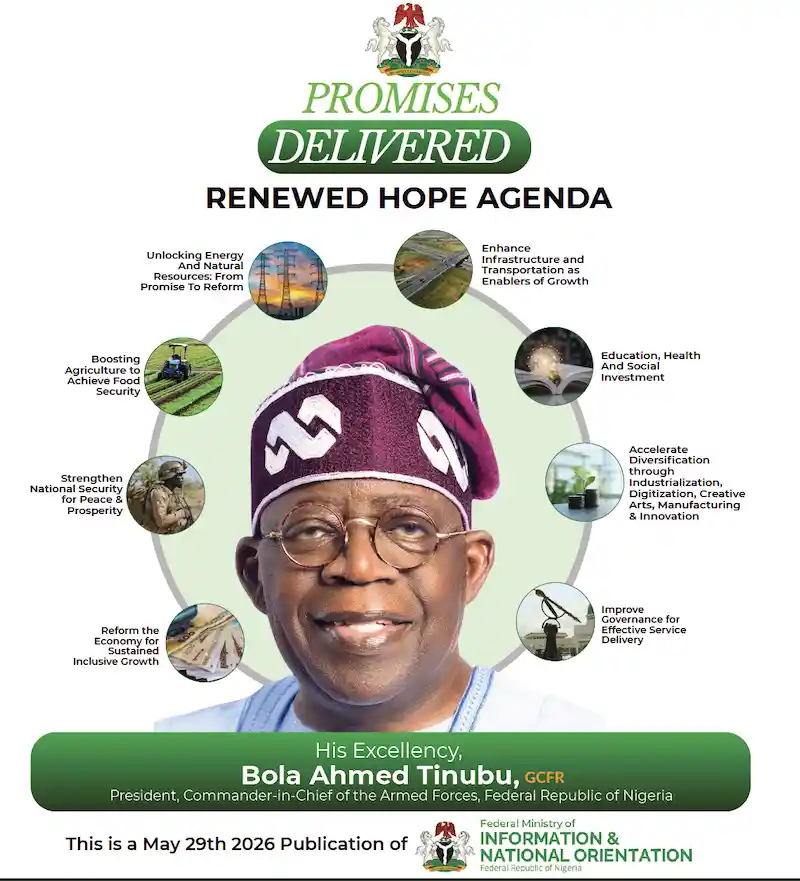
In examining the trajectory of the current administration under President Bola Ahmed Tinubu, it becomes essential to acknowledge that many of the policy initiatives undertaken in the past three years are structural in nature. Structural reforms, by their very character, are seldom designed for immediate gratification. They disrupt established patterns, challenge entrenched interests, and often impose short‑term discomfort in pursuit of long‑term equilibrium.
Economic restructuring, fiscal realignment, subsidy withdrawals, exchange‑rate harmonisation, and institutional resetting are inherently disruptive. They require time to stabilise, time to mature, and time to translate into measurable improvements in the lives of citizens. To prematurely abandon or truncate these reforms through abrupt political shifts would amount to interrupting a process whose outcomes are yet to fully materialise.
Development is neither accidental nor instantaneous. It is cultivated through persistence, adaptation, and time. A farmer who uproots his crops in frustration before the season of harvest inevitably condemns himself to scarcity. Nigeria must resist the temptation to uproot its reform agenda before the harvest season arrives.
Strategic Patience: A Democratic Virtue, Not a Political Weakness
The argument for continuity is not one of passive endorsement, but of strategic patience. A functioning democracy must provide the temporal and institutional space required for policy ideas to evolve into tangible outcomes. This is especially significant in a polity such as Nigeria, where historical discontinuity has repeatedly undermined well‑intentioned reforms.
Encouraging a sitting President to complete a constitutionally mandated second term is not an abdication of civic responsibility; it is a reaffirmation of democratic stability. Stability, in this context, is not synonymous with stagnation. Rather, it is the necessary condition for sustained economic growth, investor confidence, and institutional learning.
Frequent disruptions in leadership create an environment of uncertainty that weakens both domestic and international confidence. Investors, policymakers, and citizens alike require predictability to plan, to build, and to contribute meaningfully to national development. Democratic maturity, therefore, lies not only in the ability to change leaders, but in the wisdom to sustain governance frameworks long enough for them to bear fruit.
The Heart of the Matter: Nigeria’s Urgent Need for Systemic Reform
At the core of Nigeria’s developmental challenge lies the urgent need for systemic reform. This encompasses the re‑engineering of institutions, the strengthening of regulatory frameworks, and the entrenchment of accountability mechanisms. It demands a reconfiguration of the economic architecture to move beyond dependency and towards diversification, innovation, and digital transformation.
Human Capital as the Foundation of National Renewal
Human capital development must occupy a central place in this reform agenda. Education, healthcare, and skills acquisition are not peripheral concerns; they are the bedrock upon which any enduring national prosperity must be built. Without a healthy, educated, and empowered population, even the most sophisticated policies will falter.
Technology as a Strategic Enabler
Technological integration must be harnessed not merely as a tool of convenience, but as a strategic enabler of transparency, efficiency, and inclusion. Digital governance, cybersecurity frameworks, and innovation ecosystems present opportunities for Nigeria to leapfrog traditional constraints and position itself competitively in the global arena.
Evaluating Government Performance: A Call for Balanced Judgement
The Tinubu administration, like any other, is not without its imperfections. No government is. However, the evaluation of its performance must be grounded in an appreciation of the scale and complexity of the reforms being undertaken. Constructive criticism, policy refinement, and civic engagement are all necessary components of democratic life, but they must not degenerate into a cycle of perpetual disruption.
Nigeria requires a convergence of leadership responsibility and citizen engagement. Leaders must remain accountable, transparent, and responsive, while citizens must cultivate patience, participate actively in the democratic process, and contribute meaningfully to national development. This mutual obligation is the essence of a functional society.
The Reform Cycle: Understanding the Phases of Transformation
The notion of harvesting the dividends of reform is particularly instructive. Every meaningful transformation passes through phases: conception, implementation, resistance, adaptation, and eventually, impact. Nigeria appears to be navigating the difficult middle stages of this cycle. It is precisely at this juncture that perseverance becomes most critical.
To abandon reforms at this stage would not merely delay progress; it would reverse it. The cost of starting afresh after every election cycle is one that the nation can no longer afford. Continuity must therefore be seen as a strategic asset rather than a political concession.
Conclusion: Choosing Between Perpetual Planting and Eventual Harvest
Nigeria’s pathway to sustainable development lies not in the constant search for new leadership, but in the disciplined pursuit of systemic reform and policy continuity. Encouraging the President to complete his second term within the framework of democratic norms provides the necessary stability for reforms to mature and deliver tangible outcomes.
The future of Nigeria will not be determined by the speed with which leaders are replaced, but by the strength of the systems they build and the consistency with which policies are implemented. It is only through such an approach that the nation can move beyond cyclical challenges and towards enduring progress.
Ultimately, a harvest is not a matter of hope alone; it is the inevitable outcome of patience, labour, and time. Nigeria must now choose whether it will remain a nation of perpetual planting or become one that stays the course long enough to reap what it has sown.
Professor Ojo Emmanuel Ademola is first African Professor of Cybersecurity and Information Technology Management, Global Education Advocate, Chartered Manager, UK Digital Journalist, Strategic Advisor and Prophetic Mobiliser for National Transformation, public intellectual, and African governance thinker and General Evangelist of CAC Nigeria and Overseas. He is a columnist with Penpushing Media
FOOTNOTE: You want to share story with us? You want to advertise with us? You need publicity for product, or service, or event? Contact us on WhatsApp +2348073463653 or email penpushing@yahoo.com