



By Chief Kola Kuforiji
A National Treatise on Military Service, Sacrifice, Welfare, Dignity and the Moral Responsibility of the Nigerian State
PREAMBLE: A QUESTION WE MUST ASK OURSELVES
There are questions that a nation must periodically ask itself—not because it hates its institutions, but because it loves them enough to demand that they remain worthy of the sacrifices made in its name.
One such question is this:
What does Nigeria truly owe the man or woman who has been prepared to die for Nigeria?
It is a simple question, but it carries enormous moral weight.
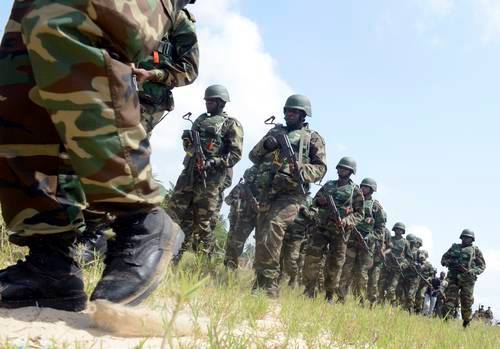
Every Nigerian soldier, sailor and airman who wears the uniform accepts a responsibility that most citizens will never be required to accept. He or she may be ordered into dangerous territory, deployed far from home, separated from family, exposed to hostile fire, confronted by terrorists, insurgents, bandits or other threats, and ultimately placed in a position where the preservation of the Nigerian State may require the sacrifice of personal safety—and, in the most tragic circumstances, life itself.
The Armed Forces are therefore not merely another category of public servants. They are the custodians of the nation’s sovereignty and territorial integrity. And because of that, the relationship between Nigeria and her military must never be reduced to a monthly salary, an annual budgetary allocation or ceremonial recognition during Armed Forces Remembrance Day.
There must be a national covenant of responsibility. The nation asks its military to defend Nigeria. Nigeria, in return, must defend the dignity, welfare and future of those who defend her.
I. THE SOLDIER’S BARGAIN WITH THE NATION
When a young Nigerian joins the Armed Forces, he does not merely accept employment.
He enters into a compact with the Nigerian State. He accepts discipline. He accepts hierarchy. He accepts restrictions that ordinary citizens do not face. He accepts postings to difficult locations. He accepts separation from his family. He accepts the possibility of injury. He accepts the possibility of death.
In return, the nation makes an implicit promise. It promises that his service will be respected. It promises that his family will not be forgotten. It promises that his injuries will be treated. It promises that his years of service will count. It promises that when his active service ends, he will not be discarded like an obsolete piece of equipment.
That is the essence of the social contract between a nation and its Armed Forces. The contract should not terminate at the moment the uniform is removed. Indeed, retirement should mark the beginning of a new chapter of national gratitude—not the beginning of national forgetfulness.
II. THE SERVING MILITARY: BRAVERY MUST NOT BE USED AS A SUBSTITUTE FOR WELFARE
Nigeria rightly praises the courage of its troops. But there is a danger in repeatedly celebrating the bravery of soldiers without confronting the material circumstances under which that bravery is exercised.
A soldier should not have to rely upon courage to compensate for inadequate equipment. A pilot should not have to compensate for deficiencies in aviation infrastructure with personal bravery A naval officer should not be expected to secure Nigeria’s maritime domain without the appropriate platforms, technology and logistical support.
A soldier fighting terrorism should have confidence that his weaponry, communications, intelligence, transportation, medical evacuation and protective equipment are worthy of the danger he has been asked to confront.
The modern battlefield is no longer determined simply by courage.It is determined by intelligence, technology, logistics, surveillance, communications, air superiority, mobility, medical support and the ability to sustain operations.
The Nigerian military therefore deserves a continuous programme of modernization.The nation cannot demand twenty-first-century military performance while providing twentieth-century support.
III. THE HUMAN BEING INSIDE THE UNIFORM
There is another dimension that we sometimes forget. The soldier is a human being before he is a soldier Behind every uniform is a husband, wife, father, mother, son, daughter, brother or sister.
When a soldier is deployed, an entire family experiences the consequences of that deployment When a soldier is injured, the family suffers. When a soldier dies, the family suffers a permanent loss When a soldier retires without adequate support, the family carries the consequences Military welfare must therefore be conceived as family welfare.
A serious national military welfare policy must address:
* Housing;
* Healthcare;
* Children’s education;
* Family accommodation;
* Insurance;
* Disability support;
* Psychological and trauma services;
* Retirement planning;
* Vocational retraining;
* Pensions and gratuities;
* And support for surviving spouses and dependants.
The Ministry of Defence itself recognises welfare as encompassing pensions, housing, medical care and resettlement for serving personnel, veterans and their families. (Ministry of Defence The challenge is therefore not merely to acknowledge the principle. The challenge is to ensure that the principle is consistently translated into reality.
IV. THE RETIRED SOLDIER MUST NOT BECOME AN INVISIBLE CITIZEN
Perhaps nowhere is the Nigerian contradiction more painful than in the treatment of some retired military personnel. During active service, the nation calls them heroes. After retirement, some may struggle to obtain what they believe is properly due to them. That transition must be fundamentally reconsidered.
A retired soldier should not have to beg for what he earned through decades of service. He should not spend endless hours pursuing pension documentation. He should not have to repeatedly prove that he served his country. He should not live with anxiety over whether his retirement benefits will arrive. He should not discover, after decades of service, that retirement means social irrelevance.
The Military Pensions Board officially states that its mission includes providing timely retirement benefits and supporting retired Armed Forces personnel to live a peaceful retired life. (Ministry of Defence
That aspiration should become a measurable national standard.A military pension should be regarded not as a favour from government but as an earned entitlement.
V. THE MORALITY OF PENSIONS
Pension administration is often discussed as an accounting matter. It is much more than that. For a military veteran, pension represents deferred compensation for years of service. It may represent the money with which he intends to pay rent, educate grandchildren, purchase medicine, support a spouse or maintain a modest standard of dignity.
Delays therefore have human consequences.
A delay in paying a military pension is not merely a delay in processing a financial transaction. For an elderly veteran, it can mean: medicine postponed; food reduced rent unpaid; family responsibilities abandoned; dignity diminished.
Nigeria must therefore move towards a system in which verified military retirement entitlements are processed through a highly efficient, transparent and technology-driven mechanism.
VI. THE WOUNDED SOLDIER
There is an especially sacred category of veterans: those whose bodies bear the physical consequences of defending Nigeria. The nation should have a permanent obligation to wounded personnel.
No soldier who loses a limb, suffers permanent disability or sustains serious psychological injury in the service of Nigeria should ever feel abandoned. Nigeria should establish a comprehensive Military Wounded and Disabled Veterans Programme, providing:
1. lifelong medical support where required;
2. prosthetic and rehabilitation services;
3. psychological and trauma care;
4. housing assistance;
5. educational support for dependants;
6. vocational retraining;
7. priority access to suitable public employment;
8. disability pensions and allowances;
9. periodic welfare assessments; and
10. a dedicated veterans’ advocacy mechanism.
Such a programme would not constitute charity.
It would constitute national justice.
VII. THE FAMILY OF THE FALLEN
There is an even greater obligation to families whose loved ones never returned The widow of a fallen soldier should never have to wage another battle with bureaucracy. The children of a fallen soldier should not pay the price for their father’s or mother’s sacrifice.
Nigeria should maintain a comprehensive national register of fallen-service families and provide long-term assistance covering education, healthcare, housing and economic empowerment. The nation’s obligation should not expire after the funeral. The funeral is the beginning of remembrance. It should not be the end of responsibility.
VIII. RETIREMENT SHOULD BE A TRANSITION, NOT A FALL
One of the most important reforms Nigeria can undertake is to change the culture surrounding military retirement.
A career soldier possesses extraordinary skills:
* Leadership;
* Discipline;
* Crisis management;
* Logistics;
* Planning;
* Teamwork;
* Strategic thinking;
* Security management;
* Communications;
* Risk assessment;
* And organisational management.
These skills are valuable to the civilian economy. The Nigerian Armed Forces Resettlement Centre already has a role in retraining retiring and retired personnel in trades, business and professional disciplines. (Ministry of Defence)
But the philosophy should go further.
Every officer and rating approaching retirement should have a structured five-year transition plan, beginning several years before retirement.
The plan should identify:
* Financial preparedness;
* Educational opportunities;
* Entrepreneurship;
* Civilian professional certification;
* Employment opportunities;
* Housing;
* Healthcare;
* Family planning;
* And psychological preparation for civilian life.
The objective should be simple: No soldier should retire into uncertainty
IX. VETERANS ARE AN ASSET, NOT A BURDEN
Nigeria must change the language with which it thinks about veterans. A veteran is not merely someone who has left the military. A veteran is a repository of national experience He has lived through discipline, leadership, sacrifice and crisis. Veterans should therefore be deliberately incorporated into national development.
Government can establish a National Veterans Service Corps, enabling qualified veterans to contribute to:
* Disaster management;
* Emergency response;
* Civic education;
* Security consultancy;
* Youth mentorship;
* Vocational training;
* Border-community development;
* Conflict resolution;
* Public safety;
* And national orientation
The nation would thereby transform military experience into a continuing national resource.
X. THE QUESTION OF MILITARY HEALTHCARE
Healthcare deserves particular attention.
A military institution that demands physical excellence from its personnel must maintain healthcare systems capable of protecting them throughout their careers and after retirement.
Military hospitals should be modernised. Specialist care should be expanded Rehabilitation should be strengthened. Mental health must be treated as seriously as physical health.
The psychological burden of counter-insurgency, terrorism, exposure to death and prolonged separation from family cannot simply disappear when a soldier leaves the battlefield.
The Defence Ministry has itself identified military healthcare as an area requiring strengthening and has stated an objective of reducing dependence on medical treatment abroad. (Ministry of Defence)
That ambition deserves national support.
Nigeria should seek to build military medical institutions capable of becoming centres of excellence not only for the Armed Forces but, where appropriate, for the wider Nigerian healthcare system.
XI. THE NATIONAL ASSEMBLY MUST PLAY ITS PAR
Military welfare cannot be left entirely to administrative discretion. Where laws, appropriations and institutional reforms are necessary, the National Assembly must act.
Parliamentary oversight should examine:
*Military pensions;
*Veterans’ entitlements;
* Housing;
* Healthcare;
* Compensation;
* Disability benefits;
* Insurance;
* Resettlement;
* Procurement;
* And the adequacy of welfare provisions.
But such oversight must be responsible. National security requires confidentiality where confidentiality is necessary. At the same time, confidentiality must never become a blanket justification for administrative opacity or failure. There must be a balance between: national security, accountability and public trust.
XII. THE PRESIDENT AND COMMANDER-IN-CHIEF
The President occupies a unique position in this conversation. The President is not merely the political head of government. As Commander-in-Chief, the President carries a special constitutional and moral responsibility towards the Armed Forces.
The President should therefore establish a permanent Presidential Military Welfare Council, bringing together:
* The Ministry of Defence;
* Defence Headquarters;
* Service Chiefs;
* Military Pensions Board;
* Armed Forces Resettlement Centre;
* Representatives of veterans;
* Relevant ministries;
* National Assembly representatives;
* And appropriate civil-society and professional experts.
Its mandate should be simple: No major welfare problem affecting serving or retired military personnel should remain invisible at the highest level of government.
XIII. A NATIONAL MILITARY WELFARE TRUST
Nigeria should also consider establishing a properly regulated National Military Welfare and Veterans Trust. It should not replace government responsibility. Rather, it should supplement it.
The Trust could receive
* Government appropriations;
* Voluntary private-sector contributions;
* Philanthropic donations;
* Corporate social responsibility contributions;
* International support where appropriate;
* And legally permissible endowments.
Its finances should be independently audited and publicly reported
The proceeds could support:
* Emergency medical treatment;
* Scholarships;
* Housing;
* Rehabilitation;
* Widows and dependants;
* Disabled veterans;
* Vocational training;
* And emergency assistance.
The principle must be clear: Government remains principally responsible; society participates in gratitude.
XIV. THE PRIVATE SECTOR MUST JOIN THE NATIONAL COVENANT
Corporate Nigeria has an important role to play. Banks, insurance companies, universities, hospitals, technology companies and manufacturers should be encouraged to develop programmes specifically for veterans.
A veteran entrepreneurship programme could provide
* Low-interest financing;
* Business training;
* Mentorship;
* Procurement opportunities;
* Professional certification;
* And preferential consideration for appropriate government-supported enterprise programmes.
Universities could reserve scholarships or fellowships for veterans and children of fallen personnel. Private hospitals could establish dedicated partnership programmes for veterans. Banks could provide preferential financial-literacy and retirement-planning programmes. This is how patriotism becomes practical.
XV. THE VETERAN SHOULD NEVER HAVE TO PROTEST TO BE HEARD
There is something fundamentally uncomfortable when veterans who once stood in defence of the Nigerian State feel compelled to publicly protest before their concerns receive attention. The nation must create institutional channels through which veterans can be heard before frustration becomes confrontation.
There should be:
* Regular veterans’ consultations;
* Regional veterans’ forums;
* Adedicated complaints and grievance mechanism;
* Time-bound resolution of pension disputes;
* Independent welfare audits;
* And annual reporting to the President and National Assembly
A mature State does not wait for the suffering of its veterans to become a national embarrassment before responding.
XVI. REMEMBRANCE DAY MUST BECOME MORE THAN CEREMONY
Every January, Nigeria remembers its fallen heroes. There are wreaths There are parades. There are speeches. There are uniforms. There are solemn ceremonies. All of these are important. But remembrance should be measured by what happens after the ceremony.
The ultimate tribute to a fallen soldier is not a wreath. It is the welfare of the family he left behind. The ultimate tribute to a wounded soldier is not a medal It is lifelong care. The ultimate tribute to a retired soldier is not a speech. It is dignity. And the ultimate tribute to the serving soldier is not merely applause. It is ensuring that he has what he needs to return safely to his family.
XVII. DIFFERENCE BETWEEN HONOUR AND GRATITUD
There is a distinction Nigeria must understand. Honour is ceremonial. Gratitude is practical. We can honour a soldier with a medal. But gratitude requires that we care for his family. We can honour a fallen soldier with a memorial. But gratitude requires that we educate his children.
We can honour a veteran with a parade. But gratitude requires that his pension is paid promptly. We can praise the Armed Forces in speeches. But gratitude requires adequate equipment, medical care and housing. That is the difference between symbolism and substance.
XVIII. A NATIONAL MILITARY WELFARE CHARTER
Nigeria should consider adopting a comprehensive National Military Welfare CharterThe Charter should establish enforceable standards covering:
Serving personnel
* Fair remuneration;
* Accommodation;
* Healthcare;
* Insurance;
* Equipment and protective gear;
* Family welfare;
* Education;
* Operational allowances;
* And retirement preparation.
Retired personnel
* Prompt pensions;
* Gratuities;
* Healthcare;
* Housing assistance;
* Resettlement;
* Vocational opportunities;
* Entrepreneurship;
* And social recognition.
Wounded personnel
* Lifelong medical support;
* Rehabilitation;
* Disability benefits;
* Prosthetics;
* Psychological care;
* And family assistance.
Families of fallen personnel
* Immediate compensation;
* Educational support;
* Healthcare;
* Housing assistance;
* And long-term economic empowerment.
Such a Charter should be accompanied by measurable performance indicators Because what cannot be measured can easily be ignored.
XIX. THE ECONOMICS OF MILITARY WELFARE
Some may ask: Can Nigeria afford all this? The better question is: Can Nigeria afford not to do it? A nation spends enormous resources responding to insecurity. It spends on military operations, equipment, intelligence, logistics, emergency interventions and reconstruction.
Investment in the welfare of military personnel is therefore not simply a social expenditure. It is part of national security. A motivated soldier is an institutional asset. A neglected soldier is a warning signal. A respected veteran strengthens public confidence in national institutions.
A neglected veteran sends the opposite message to young Nigerians considering a career in national service. If young Nigerians conclude that military service means sacrificing one’s youth and later struggling for one’s legitimate entitlements, the nation weakens its own recruitment and morale.
XX. THE DEEPER QUESTION OF NATIONAL CHARACTER
Ultimately, this debate is not just about soldiers. It is about who we are. How a country treats its weakest citizens reveals its character. How it treats its elderly reveals its humanity. How it treats its workers reveals its sense of justice.
And how it treats those who have risked their lives for the nation reveals its understanding of patriotism. Nigeria cannot demand patriotism from its citizens while appearing indifferent to the sacrifices of those who have served.
Patriotism must be reciprocal. The soldier gives. The nation must give. The soldier protects The nation must protect. The soldier sacrifices. The nation must remember.
XXI. A NEW NATIONAL COVENANT
It is time for Nigeria to establish a new covenant with her Armed Forces.
Let the covenant be founded upon five principles:
1. Dignity
Every serving and retired military personnel must be treated with dignity.
1. Timeliness
Entitlements must be paid when they become due.
1. Continuity
The nation’s responsibility does not end with retirement.
1. Family
Military welfare must include the families of those who serve.
1. Gratitude
National appreciation must be expressed through policy, not merely ceremony.
XXII. A MESSAGE TO THE SERVING SOLDIER
To the Nigerian soldier presently standing guard somewhere in the North-East, the North-West, the Niger Delta, along our borders, at sea, in the air or anywhere else in the service of Nigeria:
Your country must never forget you.
The Nigerian flag under which you serve represents more than territory. It represents millions of Nigerians who sleep peacefully because someone is awake. Your sacrifice is part of the price of our national existence.
The country owes you respect. It owes you protection. It owes you adequate equipment. It owes your family support. And when your service ends, it owes you dignity.
XXIII. A MESSAGE TO THE VETERAN
To the retired soldier:You are not yesterday’s soldier. You are a continuing part of Nigeria’s history. Your uniform may have been put away. Your service has not been erased. Your experience remains valuable. Your entitlement remains legitimate. Your dignity remains intact.
Nigeria must never allow the passage from active service to retirement to become a passage from relevance to neglect.
XXIV. A MESSAGE TO THE GOVERNMENT
Government must understand that military welfare is not an expense to be tolerated reluctantly. It is an investment in: national security; institutional morale; national cohesion; public confidence; and the future of military service.
The present Defence Ministry has publicly placed the welfare of troops and veterans among its strategic priorities, including pensions, medical care, housing and resettlement. (Ministry of Defence)
That commitment should now be converted into a long-term, bipartisan national policy that survives changes of administration.
Military welfare should not depend upon the personality of a minister, the generosity of a president or the pressure of veterans’ associations. It should be institutionalised.
XXV. THE FINAL APPEAL
Nigeria has asked much of her Armed Forces She has asked them to fight. She has asked them to defend. She has asked them to patrol. She has asked them to sacrifice. She has asked them to stand between the citizen and danger. She has asked some to pay the ultimate price
The least the nation can do is to ensure that those who survive their service are not abandoned. And the families of those who do not survive must never be forgotten. Let us therefore move beyond ceremonial remembrance to institutional remembrance.
Let us move beyond speeches to policy. Let us move beyond promises to implementation. Let us move beyond sympathy to rights and entitlements. Let us build a Nigeria where the young soldier can confidently say:
“If I give my best years to Nigeria, Nigeria will not abandon me.”
And where the retired soldier can say:
“My uniform may have come off, but my country has not forgotten me.”
That should be the standard. That should be the covenant. That should be the measure of a nation’s gratitude.
CONCLUSION: THE NATION MUST REMEMBER
A nation that forgets those who defended it eventually forgets the meaning of defence itself. Nigeria’s Armed Forces have served through civil war, peacekeeping operations, insurgency, terrorism, communal conflict, border challenges, internal security operations and countless emergencies.
The men and women who served in those difficult circumstances deserve more than occasional remembrance. They deserve a permanent place in the conscience of the nation.
Let Nigeria therefore make a solemn commitment: No serving soldier shall be treated as expendable. No wounded soldier shall be abandoned. No fallen soldier’s family shall be forgotten. No veteran shall be treated as irrelevant.
No legitimate military pension should become a prolonged battle And no Nigerian should ever have to ask: “After all I gave to my country, why has my country forgotten me?”
The answer must always be: “Nigeria remembers. Nigeria cares. Nigeria honours. Nigeria keeps faith.” That is not charity. It is not political favour. It is not generosity. It is the nation’s debt to those who have carried the burden of defending the nation. And a nation that keeps faith with its defenders earns the right to ask future generations to defend it too. The nation must remember. The nation must act. The nation must keep faith.
Chief Kola Kuforiji is a Legal Practitioner and Public Commentator
FOOTNOTE: You want to share story with us? You want to advertise with us? You need publicity for product, or service, or event? Contact us on WhatsApp +2348073463653 or email penpushing@yahoo.com