








By Professor Ojo Emmanuel Ademola
Nigeria stands at a decisive crossroads in its national security journey. From the menace of terrorism in the North-East to the persistent scourge of banditry in the North-West, the simmering secessionist tensions in parts of the South-East, piracy and illegal bunkering in the Gulf of Guinea, and the expanding networks of organised criminal syndicates across major urban corridors, the country continues to grapple with multidimensional threats that stretch conventional security capabilities to their limits. These threats are not only diverse in their manifestations but increasingly sophisticated in their execution. They exploit Nigeria’s vast geography, its porous borders, its uneven state presence, and its long-standing structural vulnerabilities.
What is particularly alarming is that insecurity is no longer confined to regions traditionally associated with violent extremism or rural banditry. It is now creeping steadily into the South-West, a region long regarded as a bastion of stability, commerce, and relative safety. The South-West’s forest belts, stretching from Oke-Ogun to the Ondo–Kogi axis, have become hideouts for criminal groups who exploit the region’s economic vibrancy, road density, and inter-state connectivity. Kidnapping-for-ransom, rural banditry, highway attacks, and the infiltration of organised criminal networks have begun to mirror patterns previously associated with the North-West and North-Central. Even Lagos, Nigeria’s commercial nerve centre, has not been spared from emerging security pressures. This creeping insecurity underscores the urgency of adopting advanced surveillance and rapid-response technologies, including combative drones, to prevent the South-West from becoming the next epicentre of violent criminality. The region’s strategic economic importance—hosting major ports, industrial corridors, and critical national infrastructure—makes proactive intervention not only necessary but imperative for national stability.
It is no longer sufficient to rely solely on traditional methods of surveillance, troop deployment, and reactive enforcement. The urgency of the moment demands a paradigm shift—one that embraces intelligent, technology-driven, and future-facing solutions. Among these, the strategic deployment of combative drones, within a regulated and accountable framework, offers a compelling pathway to deterrence, disruption, and operational superiority. The question before Nigeria is not whether drones should be integrated into the national security architecture, but how swiftly and responsibly the nation can harness their transformative potential.
The Changing Nature of Threats
Modern insecurity is asymmetric, decentralised, and technologically adaptive. Non-state actors—whether insurgent groups, violent extremist organisations, or criminal cartels—have become increasingly agile in their operations. They exploit terrain complexity, intelligence gaps, and the limitations of conventional force structures. Terrorist groups, including those designated globally for their severe human rights violations and acts of mass violence, have demonstrated an ability to disperse quickly, embed within civilian populations, and strike with unpredictability. Bandits and kidnappers operate with mobility and fluidity, often traversing state boundaries with ease. Urban criminal networks leverage digital tools, encrypted communication, and sophisticated logistics to evade detection.
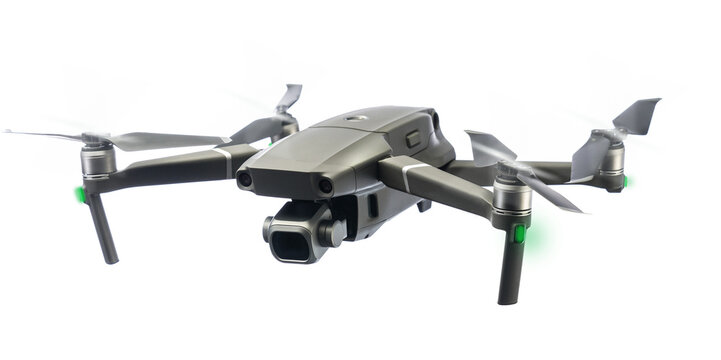
In such a landscape, the ability to see, track, and respond in real time is not merely advantageous—it is indispensable. Combative drones, or unmanned aerial systems equipped with surveillance, reconnaissance, and precision-response capabilities, can fundamentally alter this equation. Unlike traditional aircraft, drones provide persistent aerial presence, access to difficult terrains, and a reduced risk to human personnel. They can hover over forests, deserts, creeks, and mountainous regions where ground forces struggle to operate effectively. They can monitor large swathes of territory at a fraction of the cost of manned missions. Most importantly, they can deliver actionable intelligence that enhances the speed, accuracy, and effectiveness of security operations.
Strategic Advantages of Drone Deployment
Real-time intelligence gathering is one of the most significant advantages of drone technology. Drones can provide continuous surveillance, capturing live data that enhances situational awareness. In conflict-prone regions, they can track the movement of hostile actors, identify emerging threats, and support early-warning systems. In urban environments, they can assist in monitoring high-risk zones, gathering evidence, and supporting law enforcement investigations. The ability to transmit high-resolution imagery and thermal signatures in real time gives commanders a decisive edge in planning and executing operations.
Where necessary and within strict legal frameworks, drones can enable precision engagement that minimises collateral damage. This is particularly critical in environments where hostile actors embed themselves within civilian populations. Drones equipped with non-lethal or low-yield capabilities can neutralise threats with surgical accuracy, reducing the risk to innocent lives and infrastructure. This aligns with international humanitarian principles and strengthens public trust in security operations.
Operational efficiency is another compelling advantage. Compared to manned missions, drones reduce cost and risk. They require fewer personnel, lower maintenance overheads, and can be deployed rapidly. In regions where terrain or weather conditions pose challenges to traditional aircraft, drones offer a resilient alternative. Their modular design allows for quick adaptation—whether for surveillance, communication relay, or tactical response.
Nigeria’s extensive borders, stretching across deserts, forests, and waterways, remain vulnerable to smuggling, trafficking, and cross-border incursions. Drones can monitor these borders with consistency and precision. They can also safeguard critical national assets such as pipelines, power stations, rail corridors, and communication infrastructure. In the Gulf of Guinea, maritime drones can support naval operations against piracy, illegal fishing, and oil theft.
Ethical, Legal, and Governance Considerations
The deployment of combative drones must be guided by robust governance frameworks. Technology, no matter how advanced, must operate within the boundaries of law, ethics, and democratic accountability. Nigeria must therefore establish clear protocols governing drone usage, data management, engagement rules, and oversight mechanisms.
Respect for the rule of law is paramount. Drone operations must adhere to constitutional provisions, human rights standards, and international humanitarian law. Civilian protection must remain at the heart of every deployment decision. Transparency in procurement, deployment, and operational reporting will help build public trust and prevent misuse. Independent oversight bodies, parliamentary committees, and judicial review mechanisms should be empowered to monitor compliance.
Furthermore, Nigeria must develop a comprehensive regulatory framework that governs both state and non-state use of drones. As commercial and recreational drone usage expands, the risk of misuse increases. A well-defined regulatory environment will ensure that drones serve national interests without compromising privacy, safety, or civil liberties.
Building Indigenous Capacity
For Nigeria to fully harness the potential of combative drones, it must invest in homegrown innovation. Reliance on foreign technology, while useful in the short term, limits strategic autonomy and exposes the nation to vulnerabilities. Nigeria should therefore cultivate a domestic drone ecosystem through partnerships with universities, research institutes, defence academies, and the private sector.
Local manufacturing, software development, and maintenance capabilities will not only enhance national security but also stimulate economic growth. A thriving drone industry can create jobs, attract investment, and position Nigeria as a regional leader in defence technology. By integrating drone engineering into STEM curricula, supporting start-ups, and establishing innovation hubs, Nigeria can build a pipeline of skilled professionals who will drive the next generation of security technologies.
Why Combative Drones Must Be Indigenously Configured for Nigeria’s Security Needs
For Nigeria to unlock the full strategic value of combative drones, it is not enough to merely acquire foreign-made systems or import off-the-shelf technologies. The country must ensure that these drones are indigenously configured—designed, adapted, and optimised to reflect Nigeria’s unique security environment, operational realities, and geopolitical priorities. Imported systems often come with limitations: restricted access to source codes, dependency on foreign maintenance, vulnerability to external interference, and misalignment with the terrain-specific challenges that define Nigeria’s security landscape.
Nigeria’s security threats are deeply contextual. The dense forests of the South-West, the rugged mountains of the North-East, the savannah expanses of the North-West, the riverine creeks of the Niger Delta, and the vast maritime domain of the Gulf of Guinea each present distinct operational demands. Only drones configured with indigenous intelligence—built to navigate local weather patterns, vegetation density, communication blind spots, and the behavioural patterns of local adversaries—can deliver optimal performance. Foreign manufacturers cannot fully anticipate these nuances; Nigerian engineers, researchers, and security professionals can.
Indigenous configuration also strengthens national sovereignty. Nations that rely heavily on foreign defence technologies often find themselves constrained by licensing restrictions, export controls, and geopolitical bargaining. By developing drones whose hardware, software, and data architecture are controlled locally, Nigeria reduces its exposure to external vulnerabilities. It ensures that mission-critical data—surveillance footage, thermal signatures, geospatial mapping, and operational logs—remain within national custody, protected from foreign interception or manipulation.
Furthermore, locally configured drones can integrate seamlessly with Nigeria’s existing security systems. They can be programmed to interface with national command-and-control centres, local communication networks, and region-specific intelligence databases. They can be adapted to support joint operations between the military, police, immigration service, customs, and maritime agencies. This interoperability is essential for building a unified, technology-driven security ecosystem.
Indigenous configuration also accelerates innovation. When Nigerian engineers and defence technologists take ownership of drone design and adaptation, they develop the capacity to iterate, improve, and innovate continuously. They can incorporate artificial intelligence for predictive threat analysis, enhance battery endurance for long-range missions, and develop payloads suited to Nigeria’s operational doctrines. Over time, this builds a resilient defence-industrial base capable of exporting technology, attracting investment, and positioning Nigeria as a continental leader in security innovation.
Ultimately, indigenously configured combative drones are not merely tools of warfare; they are instruments of national self-determination. They embody a strategic shift from dependency to autonomy, from vulnerability to resilience, and from reactive security to proactive national defence. For a country confronting complex, evolving, and regionally diverse threats, indigenous configuration is not optional—it is the foundation of a credible and sustainable security renaissance.
Integration with a Broader Security Framework
Drones are not a silver bullet. They must complement, not replace, ground forces, intelligence systems, and inter-agency coordination. Effective drone deployment requires seamless integration with military units, police formations, intelligence agencies, and emergency response teams. Data gathered from drones must feed into national security databases, command centres, and predictive analytics systems.
Inter-agency collaboration is essential. The military, police, immigration service, customs, and maritime agencies must share intelligence and coordinate operations. A unified command structure will ensure that drone-generated intelligence is utilised efficiently and that operational responses are synchronised.
A Call to Action
The adoption of combative drones within a lawful, ethical, and strategic framework offers Nigeria an opportunity to strengthen national security, protect lives, and restore confidence in governance. The nation cannot afford to lag in a world where technology defines the pace and effectiveness of security operations. Drones represent not merely a tool but a transformative capability—one that can help Nigeria reclaim control over its territory, deter hostile actors, and build a resilient security architecture fit for the twenty-first century.
Nigeria’s security renaissance will not emerge from rhetoric but from decisive action, strategic investment, and unwavering commitment to innovation. The time to act is now
Professor Ojo Emmanuel Ademola is first African Professor of Cybersecurity and Information Technology Management, Global Education Advocate, Chartered Manager, UK Digital Journalist, Strategic Advisor and Prophetic Mobiliser for National Transformation, public intellectual, and African governance thinker and General Evangelist of CAC Nigeria and Overseas. He is a columnist with Penpushing Media
FOOTNOTE: You want to share story with us? You want to advertise with us? You need publicity for product, or service, or event? Contact us on WhatsApp +2348073463653 or email penpushing@yahoo.com