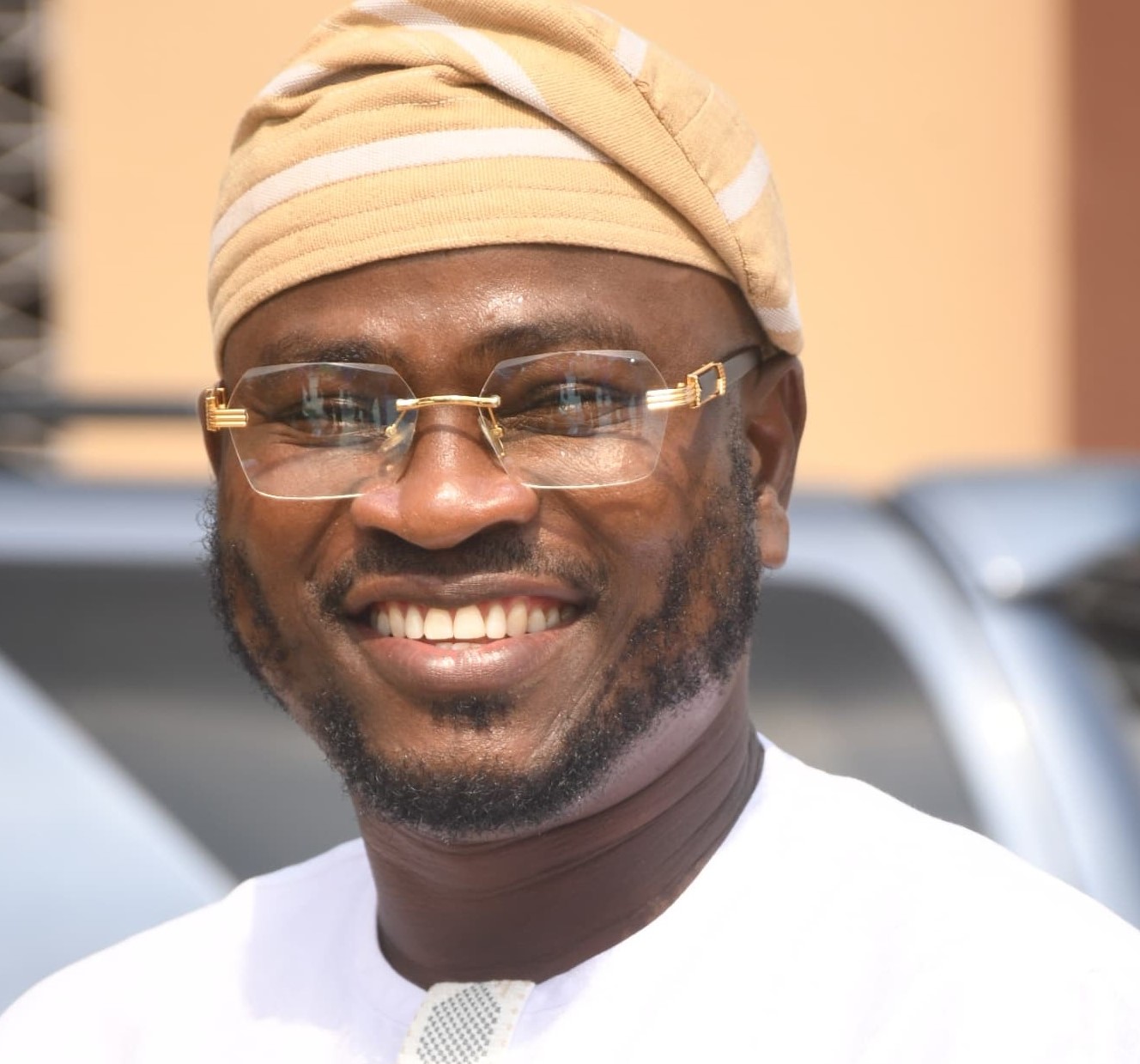
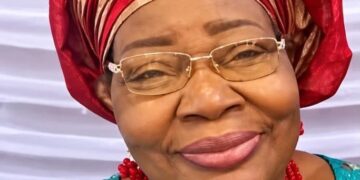

A Speech by Dr. Ebonhor Michael
Chairman, Joint National Association of Persons with Disabilities (JONAPWD), Ogun State Chapter. Delivered on: June 2nd, 2026
Introduction
Good morning, my fellow farmers. Good morning, my fellow champions. Good morning, my family.
Today is June 2nd, 2026. Let this date be remembered in the history of disability and agriculture in Ogun State. Let it be known that on this day, we decided to stop begging and start farming together.
Let me first acknowledge the government officials present here today – and I want to give special recognition to representatives from the Ministry of Agriculture, Ogun State. Thank you for being here. You are the most important people in this hall today because without agriculture, none of us eats. And without including persons with disabilities in agriculture, Ogun State is losing half of its farming strength.
I also acknowledge all other government officials in this hall.
But let me give very special and heartfelt recognition to the organizer of this programme – the Value Chain Development (VDC) programme. This is a Federal Government of Nigeria assisted IFAD sponsored programme. I want to say a very big thank you to the VDC team. Thank you for understanding that disability and agriculture must go together.
Thank you for creating this platform to talk about how we, persons with disabilities in Ogun State, can be part of the agricultural value chain – from farm to table, from production to processing to marketing. May God continue to bless the Value Chain Development programme, the Federal Government of Nigeria, and IFAD for this support. Please, let us give them a big hand – or a big tap of our canes.
And finally, I acknowledge every single person with a disability sitting in this hall – farmers, processors, traders, and those who want to start. From Abeokuta to Ijebu-Ode, from Sagamu to Ilaro, from Otta to Ikenne.
My name is Dr. Ebonhor Michael. I am the Chairman of the Joint National Association of Persons with Disabilities, Ogun State Chapter – JONAPWD Ogun State.
I stand before you as your brother, your servant, and your chairman. But today, I also stand before you as a farmer. Many of you know that I have personally struggled to access farmland, inputs, and markets because of my disability. So I am not speaking theory. I am speaking from my life.
Today, on this 2nd day of June, 2026, I want to ask you a question. Imagine a basket of cassava. One person carrying it can barely move. But ten people carrying that same basket together? They walk fast, they walk far, and they reach the market.
That is why we are here today – thanks to the Value Chain Development programme, a Federal Government of Nigeria assisted IFAD sponsored programme. We are here to talk about forming, strengthening, and supporting a State Network for Persons with Disabilities in Ogun State – but not just any network. A network specifically focused on agricultural value chain inclusion.
Today, I will share with you three things: how we form this agricultural network, how we strengthen it, and how we get support so that no PWD in Ogun State is left out of farming, processing, or selling agricultural products.
Part One: Why an Agricultural PWD Network Matters in Ogun State
Let me be direct. Ogun State is an agricultural state. We have land. We have rain. We have hardworking people. But persons with disabilities are largely invisible in agriculture.
Ask yourself these questions:
· How many PWDs have you seen receiving government farming inputs like cassava stems, cocoa seedlings, or fertilizers?
· How many PWDs have been trained by the Ministry of Agriculture on modern farming techniques?
· How many PWDs have been given access to agricultural loans or tractor hiring schemes?
The answer is almost zero.
This is not because we cannot farm. This is because we have no unified voice to demand inclusion in the agricultural value chain.
A PWD State Network focused on agriculture will do the following:
First, advocate for PWD inclusion in all agricultural programs. When the Ministry of Agriculture distributes inputs, we will be on the list. When there are farming trainings, we will be in the hall. When there are agricultural loans, we will be at the table.
Second, share farming resources among PWDs. One group may have access to land. Another group may have access to seedlings. Another may have processing equipment. A network allows us to share these resources so that everyone benefits.
Third, collect data on PWD farmers in Ogun State. How many of us are farming? What crops do we grow? What challenges do we face? With data, we can prove our case to the government.
Fourth, create a PWD-owned agricultural value chain. Imagine PWDs producing cassava, PWDs processing that cassava into garri or flour, and PWDs selling that product in the market. That is not a dream. That is possible. But only if we organize.
As your Chairman, I am tired of attending agricultural meetings where we are given biscuits and soft drinks and then forgotten. I want PWDs in Ogun State to own farms, to own processing mills, and to own market stalls. That is why we need this network.
Part Two: How We Form This Agricultural PWD Network – The First Steps. Let me be practical. No more waiting. Action begins now – on this June 2nd, 2026. Phase one: Formation within the next three to six months (by December 2026).
First, we must identify every PWD farmer, processor, and agricultural trader across Ogun State’s 20 local governments. I am asking each of you today to go back to your communities and find them. Write down their names, what they farm, what challenges they face. Bring that information to our next meeting. JONAPWD will provide the secretarial support.
Second, we form an agricultural steering committee made up of PWDs who are actively engaged in farming or agribusiness. This committee must include women with disabilities, youth with disabilities, rural PWDs, and PWDs from all impairment groups. If any group is left out, our agricultural network is weak.
Third, we draft a constitution specifically for this agricultural network. It will state how we share farming resources, how we access land collectively, how we market our products together, and how we manage any funds or inputs we receive.
Fourth, we register this network with the Ministry of Agriculture and the Ministry of Women Affairs and Social Development. Registration gives us the right to demand agricultural inputs, training, and loans as a recognized group.
These are our first tasks. They are not difficult. They only require that we work together.
Part Three: How We Strengthen the Agricultural PWD Network – Building Real Farming Power Formation is just the beginning. Strengthening is where we learn to farm better, process better, and sell better.
Within six to twelve months (by June 2027), we must build agricultural capacity. I propose regular agricultural workshops for PWDs on:
· Modern farming techniques for cassava, maize, vegetables, cocoa, and palm oil
· Climate-smart agriculture for smallholder farmers
· Post-harvest handling and processing (garri making, cassava flour, palm oil processing)
· Cooperative formation and marketing
· Accessing agricultural loans – NIRSAL, Bank of Agriculture (BOA), and other schemes
Knowledge is power. And when PWDs know modern farming, we will no longer be beggars. We will be producers.
We also need demonstration farms in each agricultural zone of Ogun State – one in Egba, one in Ijebu, one in Remo, one in Yewa. These farms will be where PWDs learn by doing. The Value Chain Development programme, with support from IFAD and the Federal Government of Nigeria, can help us set these up.
We also need subcommittees for:
· Land access (negotiating with communities and government for farmland for PWDs)
· Inputs sharing (seeds, fertilizers, cassava stems, cocoa seedlings)
· Processing and value addition (garri, flour, palm oil, snacks)
· Marketing and sales (connecting PWD farmers to buyers and markets)
As your Chairman, I promise to lead this agricultural effort. But I will not do it alone. We will do it together.
Part Four: How We Sustain Support – Keeping the Agricultural Network Alive
The biggest danger is excitement today and silence tomorrow. We must build systems that last.
To sustain our agricultural network, we need three kinds of support.
First, from the Ogun State Government – especially the Ministry of Agriculture.
We will demand:
· Annual allocation of farming inputs (improved seeds, cassava stems, fertilizers, cocoa seedlings, palm oil seedlings) specifically for PWD farmers
· Dedicated agricultural extension officers trained to work with PWDs
· Access to farmland for PWD cooperatives across the state
· Inclusion of PWDs in all agricultural loan schemes – NIRSAL, BOA, and others – with flexible conditions
· Accessible processing centers where PWDs can use equipment without barriers
These are not favors. These are rights under the Disability Act.
Second, from the Value Chain Development (VDC) programme – a Federal Government of Nigeria assisted IFAD sponsored programme.
We ask VDC to continue supporting us with:
· Training on value chain development
· Linkages to buyers and markets
· Technical assistance for processing and packaging
· Mentorship for PWD agribusinesses
Third, from ourselves – the PWD agricultural community.
No network works without active participation. We must:
· Contribute small monthly dues to support network activities
· Share farming information and opportunities with each other
· Work together on group farms and processing
· Set aside jealousy and competition. If one PWD farmer succeeds, we all succeed.
As your Chairman, I will be the first to contribute my land, my time, and my resources. But I cannot farm for all of you. I need every single one of you to wake up and work.
Conclusion
Let me close with this.
My name is Dr. Ebonhor Michael. I am a person with a disability. I am a farmer. And I am tired of seeing PWDs in Ogun State beg for food when we have hands to farm, land to use, and brains to build agribusinesses.
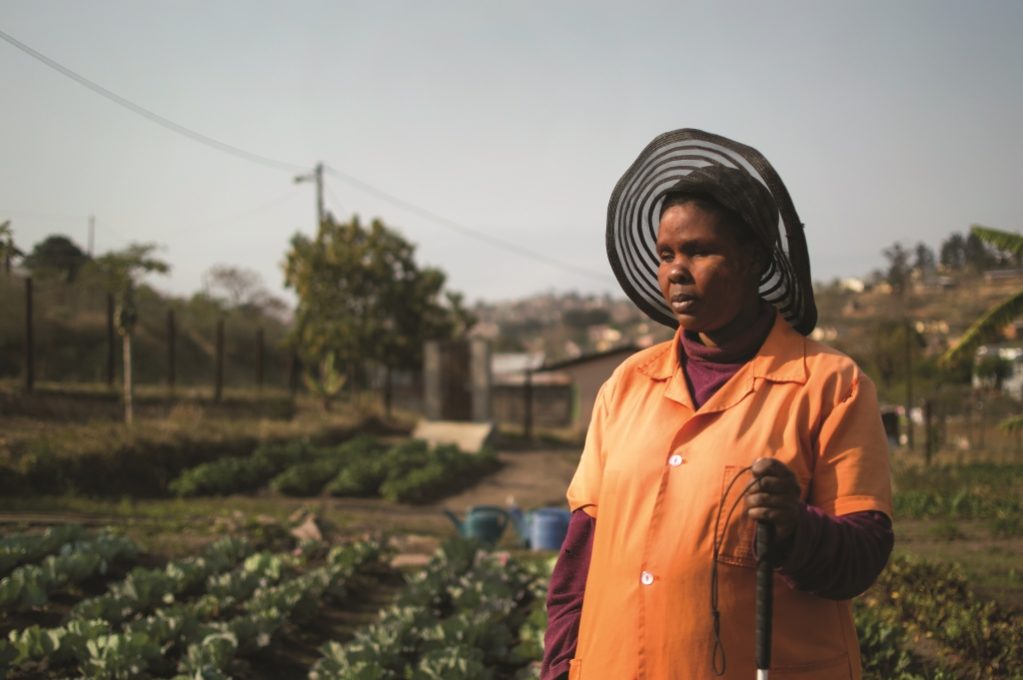
For too long, people have looked at us and said, “You cannot farm because you have a disability.” That is a lie. I have seen a blind man plant cassava perfectly. I have seen a wheelchair user run a poultry farm. I have seen a deaf woman process and sell palm oil. Disability is not inability. Inability is when we refuse to organize.
This meeting – June 2nd, 2026 – must not be just a talk shop. It must be the day we committed to building an agricultural PWD network that no government ministry, no input distributor, and no market can ignore.
Alone, we harvest a basket. Together, we fill a barn.
Here is my call to action for each of you:
One – if you are a PWD farmer, processor, or trader, come and register your name with me after this meeting.
Two – go back to your local government and identify every PWD involved in agriculture. Bring that information to our next meeting.
Three – our next meeting will be in 30 days – on July 2nd, 2026. Come with your ideas, your challenges, and your commitment.
And before I sit down, let me once again thank the Value Chain Development (VDC) programme – a Federal Government of Nigeria assisted IFAD sponsored programme. Thank you for seeing us as farmers, not as charity cases. We will not waste this opportunity. Thank you also to the Federal Government of Nigeria and IFAD for making this programme possible.
To the Ministry of Agriculture – we are ready. Give us inputs. Give us training. Give us land. We will prove that PWDs can feed Ogun State.
The PWD agricultural community in Ogun State has waited long enough. Our children are hungry. Our future is waiting.
Today – June 2nd, 2026 – we begin.
Let us raise our hands – or tap our canes together – as a sign of our commitment to farm together.
God bless the Value Chain Development programme, the Federal Government of Nigeria, and IFAD.
God bless the Ministry of Agriculture, Ogun State.
God bless JONAPWD Ogun State.
God bless every PWD farmer in Ogun State.
And God bless the Gateway State.
Thank you.
Dr. Ebonhor Michael
Chairman, JONAPWD Ogun State Chapter
June 2nd, 2026
FOOTNOTE: You want to share story with us? You want to advertise with us? You need publicity for product, or service, or event? Contact us on WhatsApp +2348073463653 or email penpushing@yahoo.com