


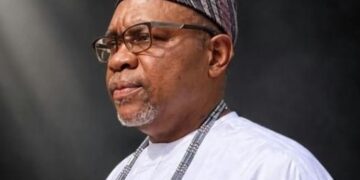


By Professor Ojo Emmanuel Ademola
Nigeria’s democracy has entered yet another season in which familiar phrases resurface with unnerving predictability: “step down for him,” “join the queue,” “it is not yet your turn,” and the ever‑elastic “party supremacy.” These expressions, though seemingly harmless, have become the coded language of a political culture that resists renewal, suppresses merit, and elevates hierarchy over democratic competition. They reveal a deeper malaise: a democracy still struggling to free itself from the grip of patronage, gerontocracy, and transactional politics. At the heart of this recurring drama lies a fundamental question: what kind of democracy is Nigeria building when political participation is governed not by competence or vision, but by invisible queues, godfather networks, and the unwritten doctrine of “wait until we call you”?
The Return of the Old Vocabulary
Every election cycle, the same script reappears. Aspirants are persuaded—or coerced—to step down for “anointed” candidates. Party elders insist that younger or less‑connected contenders must “wait for their turn.” Negotiations take place in backrooms rather than in open debates. Delegates are mobilised not by ideas but by inducements. The electorate is told that “consensus” has been reached, even when such consensus is neither transparent nor democratic. This choreography is not new. It is a relic of Nigeria’s military‑era political engineering, where hierarchy was enforced, dissent was discouraged, and leadership was allocated rather than earned. What is troubling is how deeply this culture has survived, even after two decades of civilian rule. The language of “joining the queue” is not merely metaphorical; it is a political instrument used to maintain control, reward loyalty, and prevent disruption of established power blocs. It is a mechanism for recycling the same political actors, many of whom have been in the corridors of power for decades.
Democracy or Queue Management?
Democracy thrives on competition, ideas, and the free contestation of leadership. Nigeria’s political culture, however, often resembles a queue management system in which individuals are expected to wait patiently for a turn that may never come. This system is sustained by patronage networks that elevate loyalty to godfathers above competence, gerontocratic control that treats age rather than ability as the primary qualification for leadership, and a brand of consensus politics that often serves as a euphemism for elite imposition rather than genuine agreement. These forces create a political environment in which innovation is stifled, younger leaders are marginalised, and the electorate is denied meaningful choice.
The Myth of “Not Yet Your Turn”
The phrase “not yet your turn” has become one of the most corrosive ideas in Nigeria’s political lexicon. It suggests that leadership is a rotational entitlement rather than a responsibility earned through competence, vision, and public trust. It reduces governance to a waiting game and transforms political ambition into a matter of seniority rather than service. This mentality discourages meritocracy by pushing capable individuals out of the political space. It entrenches mediocrity by selecting candidates based on loyalty rather than ability. It fuels ethnic and regional bargaining by turning leadership into a commodity traded among elites. It weakens accountability because leaders who ascend through turn‑taking feel answerable to their patrons, not the people. In mature democracies, leadership emerges from open competition. In Nigeria, it too often emerges from closed‑door negotiations.
Why Do Aspirants Keep Stepping Down?
The phenomenon of aspirants stepping down is rarely voluntary. It is usually the outcome of intense pressure, promises of future rewards, or threats of political isolation. The reasons are structural. Delegate systems concentrate power in the hands of a few, making aspirants dependent on political brokers. The financial cost of politics is so prohibitive that independent campaigns are nearly impossible. Party godfatherism punishes disobedience and rewards compliance. Weak internal party democracy allows party executives to impose candidates with minimal resistance. When aspirants step down, the electorate loses the opportunity to evaluate competing visions. The political space becomes narrower, less vibrant, and less democratic.
The Vicious Cycle of Political Recycling
Nigeria’s political class remains remarkably stable not because it delivers effective governance, but because the system is engineered to reproduce the same actors in an endless loop. Individuals rotate through offices, switch parties without ideological justification, and re‑emerge after periods of public disapproval, sustained by party structures, access to state resources, and a political culture that mistakes longevity for legitimacy. The absence of ideological clarity allows parties to function as platforms for personal ambition rather than national transformation, enabling politicians to migrate freely in pursuit of power.
The monetisation of political participation further entrenches this cycle, as the prohibitive cost of nomination forms, delegate mobilisation, and campaign machinery restricts political access to the wealthy and well‑connected. Their dominance is reinforced by entrenched patronage networks, media visibility that creates an illusion of indispensability, and cultural reverence for age that is exploited to sideline younger aspirants.
This recycling is compounded by weak regulatory and judicial institutions that struggle to impose consequences for misconduct, allowing political actors to evade accountability and return to public life with ease. The result is a democracy that appears participatory but remains structurally exclusionary, offering continuity rather than renewal. Innovation is stifled, governance failures persist, and public trust erodes as citizens witness elections that rotate familiar faces rather than introduce fresh leadership. Voter apathy deepens because the political landscape feels predetermined, and the promise of democratic transformation remains perpetually deferred. Nigeria is thus left with a political order where old actors dominate new stages, and where the nation’s democratic potential is continually undermined by a system that recycles its past instead of cultivating its future.
The Youth Question: Energy Without Access
Nigeria is a young nation with an old political class. Over 70 per cent of the population is under 35, yet this demographic is largely absent from meaningful political leadership. The “queue mentality” is partly responsible. Young people are told to “wait,” even though they are the ones who bear the consequences of poor governance. The Not Too Young To Run Act was a step forward, but legal eligibility does not automatically translate into political opportunity. Without dismantling the culture of imposed consensus and queue‑based leadership, young Nigerians will remain spectators rather than participants.
The Moral and Democratic Cost
The politics of stepping down and waiting for one’s turn has profound implications. It undermines public trust as citizens see leaders emerge through imposition rather than competition. It weakens institutions because parties become vehicles for personal ambition rather than democratic platforms. It fuels voter apathy as elections appear predetermined. It erodes accountability since imposed leaders feel insulated from public scrutiny. A democracy that does not allow genuine contestation is democracy in name only.
What Must Change?
Nigeria cannot continue to operate a democracy built on queues, imposition, and political inheritance. Strengthening internal party democracy is essential, with transparent primaries, enforceable term limits for party executives, and the elimination of imposed candidacies. Reducing the cost of politics through campaign finance reform is necessary to ensure that political participation is not restricted to the wealthy or well‑connected. Young leaders must be empowered with real influence rather than ceremonial roles. Public debates and scrutiny should be institutionalised so that aspirants present their ideas openly rather than negotiating in private. Ending godfatherism requires legal reforms, civic education, and stronger enforcement of anti‑corruption laws.
A Call for Democratic Maturity
Nigeria stands at a crossroads. The nation cannot build a 21st‑century democracy with 20th‑century political habits. The politics of stepping down, queue‑taking, and turn‑waiting is incompatible with a modern democratic ethos. It is time to embrace a political culture that rewards competence, encourages competition, and ris espects the will of the people. Democracy is not a queue. It is a contest of ideas, a marketplace of visions, and a covenant between leaders and citizens. Nigeria must choose whether to remain trapped in the politics of imposition or to rise into a future where leadership is earned, not allocated.
Professor Ojo Emmanuel Ademola first African Professor of Cybersecurity and Information Technology Management, Global Education Advocate, Chartered Manager, UK Digital Journalist, Strategic Advisor and Prophetic Mobiliser for National Transformation, public intellectual, and African governance thinker and General Evangelist of CAC Nigeria and Overseas. He is a columnist with Penpushing Media
FOOTNOTE: You want to share story with us? You want to advertise with us? You need publicity for product, or service, or event? Contact us on WhatsApp +2348073463653 or email penpushing@yahoo.com